A Simple 7-Day Meal Plan with Protein at Every Meal
A flexible week of breakfast, lunch, and dinner ideas, plus a practical shopping list and a midweek prep reset.
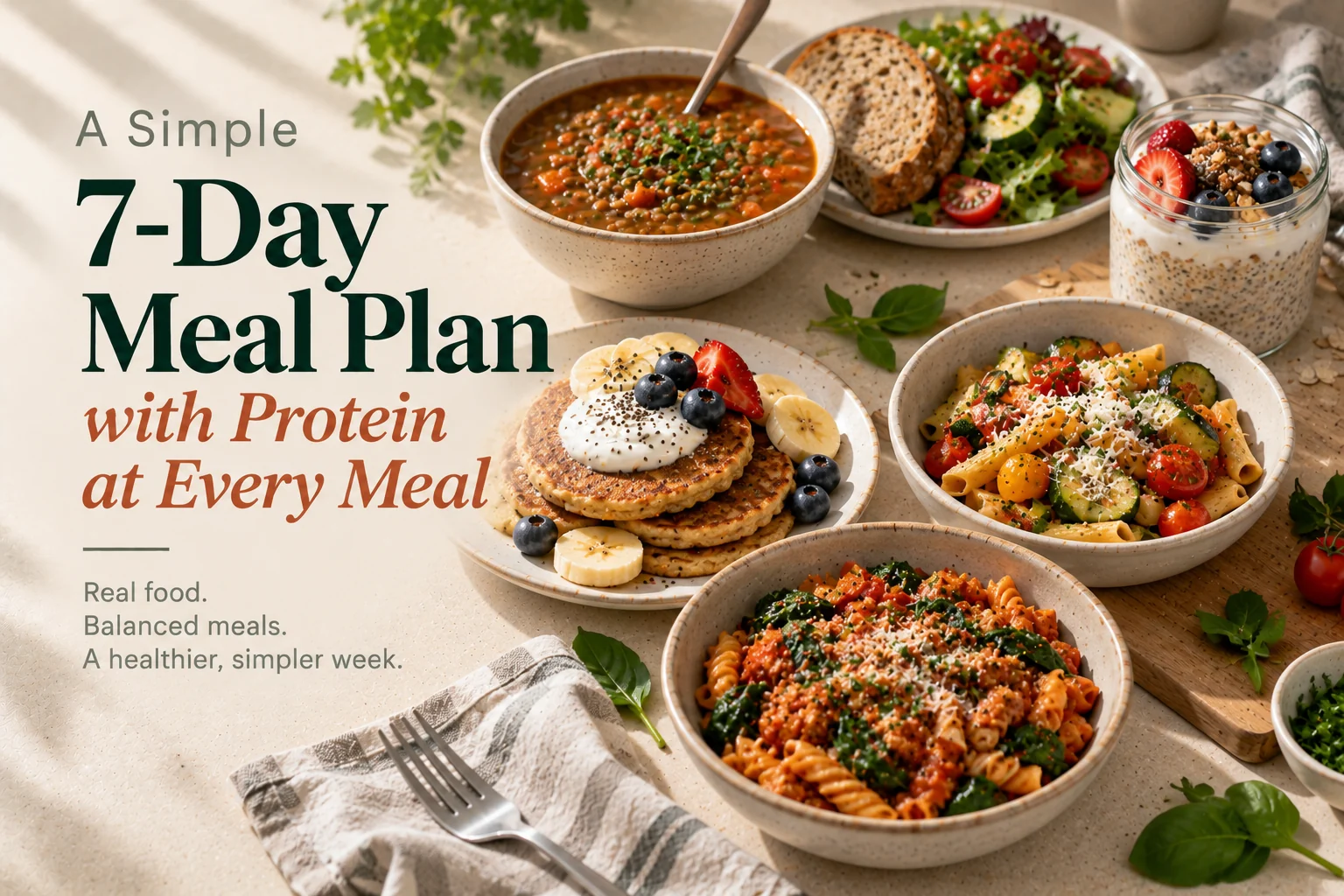
A meal plan should reduce decisions, not add rules. This sample week uses a small group of ingredients in different combinations so you can shop once, prepare a few basics, and keep dinner flexible.
It is a general meal-idea plan for adults, not a personalized calorie or protein prescription. Portions, snacks, and extra food should reflect your appetite, activity, budget, and individual needs. Swap freely when an ingredient does not work for you. Our balanced plate guide can help you adapt the meals without treating the menu as a set of rules.
Your week at a glance
| Day | Breakfast | Lunch | Dinner |
|---|---|---|---|
| Monday | Greek yogurt, oats, and berries | Chickpea grain bowl with greens | Chicken or tofu, roasted potatoes, and broccoli |
| Tuesday | Eggs or tofu on toast, fruit | Monday’s dinner in a wrap | Black bean tacos with cabbage and avocado |
| Wednesday | Overnight oats with yogurt | Lentil soup, bread, and a side salad | Salmon or white beans with rice and green beans |
| Thursday | Cottage cheese toast and fruit | Rice bowl with Wednesday’s protein | Turkey or lentil tomato pasta with spinach |
| Friday | Yogurt, banana, and nuts | Pasta leftovers with vegetables | Sheet-pan tofu and vegetables with couscous |
| Saturday | Egg-and-bean breakfast tacos | Hummus, chickpea, and vegetable pita | Build-your-own chicken or bean grain bowls |
| Sunday | Oat pancakes with yogurt | Grain bowl leftovers, stored safely | Vegetable frittata or chickpea skillet with toast |
Include snacks if they suit your day. Fruit with nuts, yogurt, or hummus with crackers are straightforward options. This plan does not require skipping snacks or limiting meals to the foods in the table.
A shopping list that overlaps on purpose
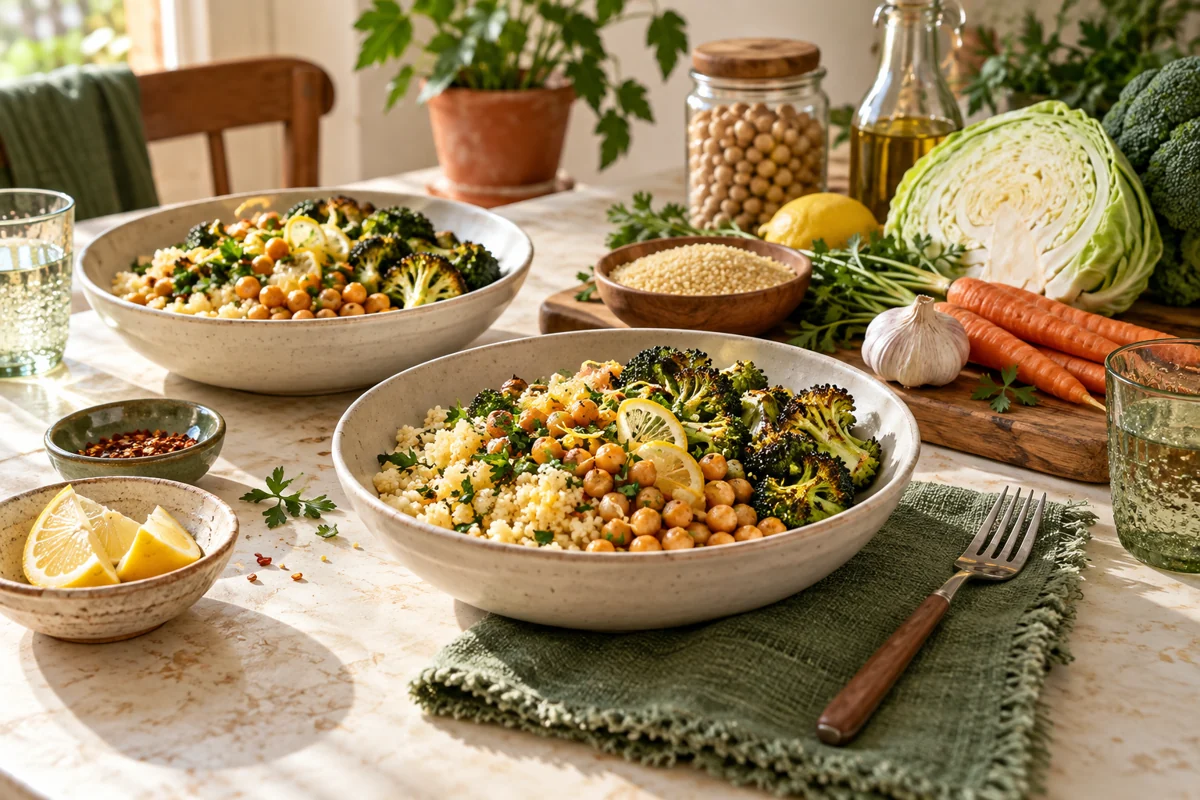
Protein foods: eggs, plain Greek yogurt or soy yogurt, chickpeas, lentils, black beans, tofu, and your choice of chicken, fish, or turkey. You do not need every animal-protein option; use beans and tofu to simplify.
Grains and starches: oats, whole-grain bread, tortillas, rice, pasta, potatoes, and couscous. Choose two or three if storage space or budget is limited.
Produce: berries, bananas, apples, spinach or other greens, broccoli, cabbage, carrots, green beans, and lemons. Frozen vegetables are welcome.
Flavor and pantry basics: olive oil, canned tomatoes, salsa, hummus, nuts or seeds, garlic, cumin, and black pepper. Check the pantry before shopping.
A manageable first prep session
Set aside about an hour, but do not feel you have to complete the whole list. Cook one grain, roast one tray of vegetables, and prepare one protein food. Wash fruit and mix a simple dressing while the oven is on. For a smaller first session, follow our beginner meal prep approach and prepare just a few reusable components.
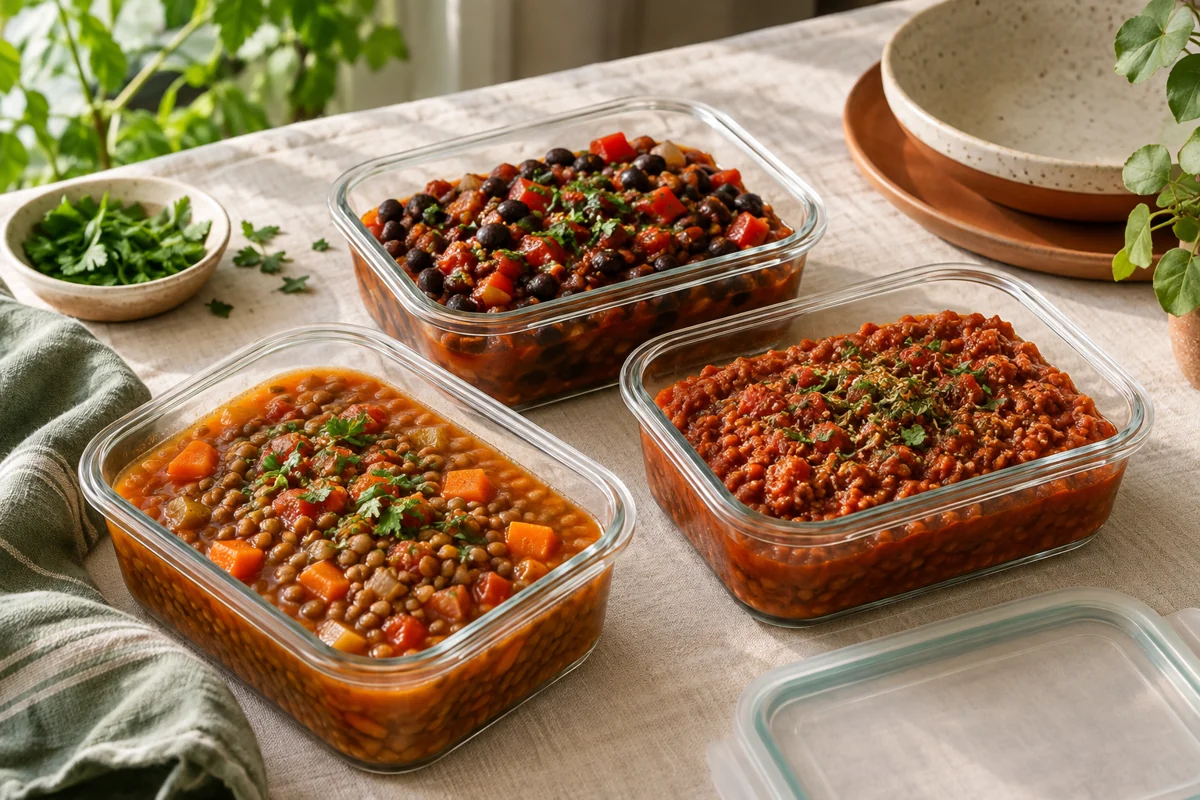
Store cooked food in shallow, covered containers and refrigerate promptly. Do not prepare seven days of refrigerated leftovers at once. Plan a midweek cooking session or freeze the portions intended for later in the week.
The midweek reset
On Wednesday or Thursday, check what remains. Freeze food you cannot use safely in time, refresh your vegetables, and cook a second batch of grains or protein. Repeating a favorite dinner is entirely reasonable.
USDA guidance is to refrigerate perishable leftovers within two hours, or within one hour when temperatures are above 90°F. Keep the refrigerator at 40°F or below, use refrigerated leftovers within three to four days, and reheat leftovers to 165°F. Use a food thermometer rather than judging by appearance.
If you want a more guided option than this flexible example week, you can explore a structured weight-management meal plan as a next step.
Make this a plan you can keep
If your week changes, let the plan change too. Move a meal, use a frozen backup, or combine ingredients into a sandwich. A meal plan is a tool for making daily life easier; it is not a test of discipline.
Keep one backup meal: Canned beans, frozen vegetables, and quick-cooking rice can become dinner when the day does not go as planned.
A few common questions
Can I adapt these ideas to my preferences?
Yes. These are flexible meal ideas. Adjust ingredients and portions to your appetite, budget, allergies, and any advice from your own care team.