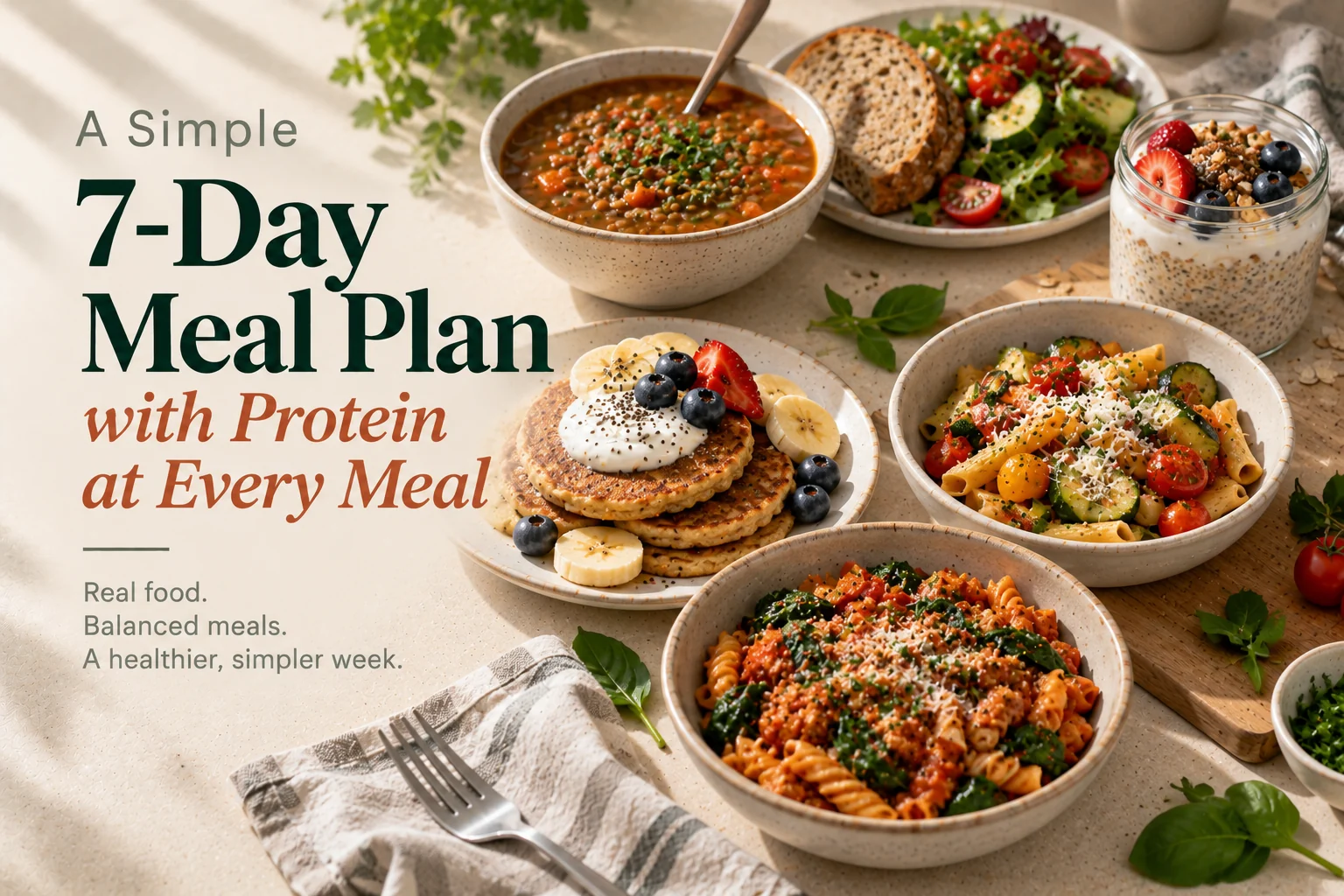
How to Build a Balanced Plate Without Overthinking It
A flexible visual guide to vegetables, protein foods, grains, and satisfying extras—made for everyday meals.
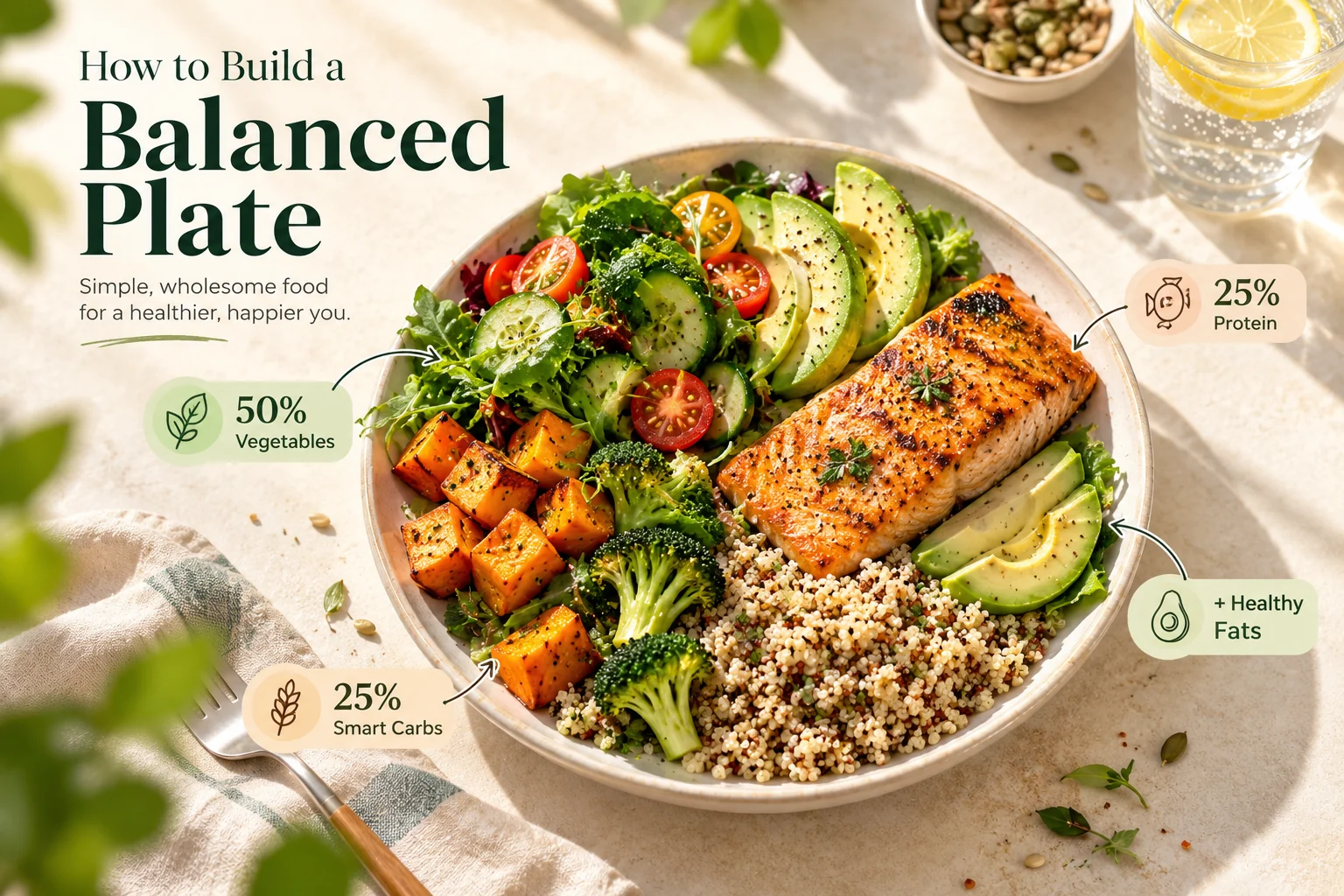
A balanced plate is a starting point, not a set of lines you must draw around your food. It can help when you are deciding what to cook, assembling leftovers, or choosing what to add to a meal that feels incomplete.
Federal dietary guidance emphasizes a varied eating pattern built from vegetables, fruits, grains, protein foods, and dairy or fortified alternatives. In everyday cooking, those foods may appear in a bowl, sandwich, soup, or skillet rather than neatly separated on a plate. For practical dinner combinations, try our easy healthy weeknight dinners.
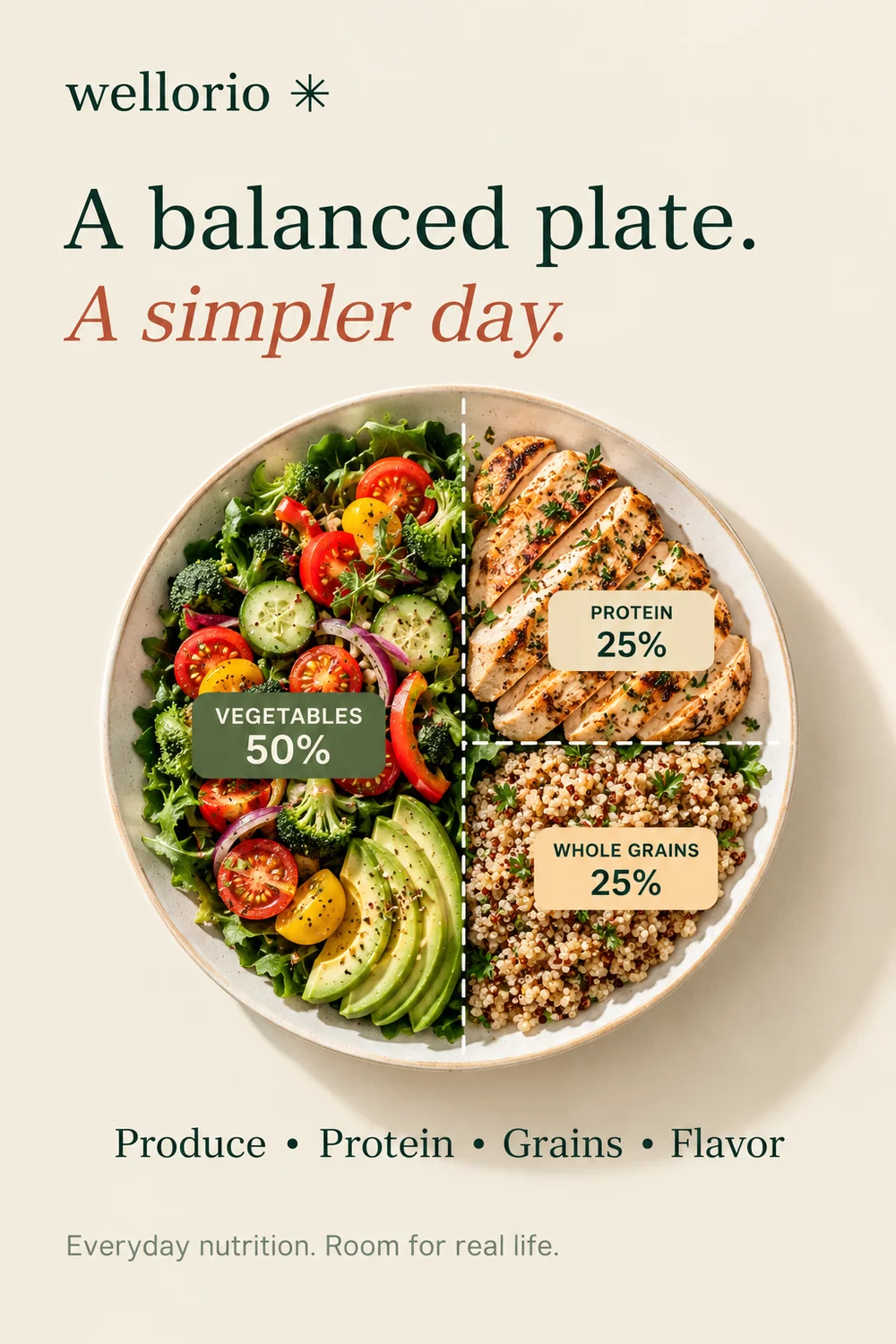
A simple visual guide: vegetables first, then protein and whole grains.
Begin with produce
A half-plate of produce can be an approachable visual cue, not a requirement to measure every bite. A mix of colors and types brings variety, and frozen or canned options can be convenient.
At dinner, that could mean roasted broccoli and a side of tomatoes. At lunch, it might be a vegetable-filled sandwich with fruit alongside it. Breakfast can include berries, sautéed greens, or both. What matters is the overall pattern, not making every meal identical.
Add a protein food
Choose a food such as beans, lentils, tofu, eggs, fish, poultry, meat, nuts, or seeds. Your serving size will depend on your needs and the rest of your meal. Protein foods are one part of eating well, not a reason to remove other food groups.
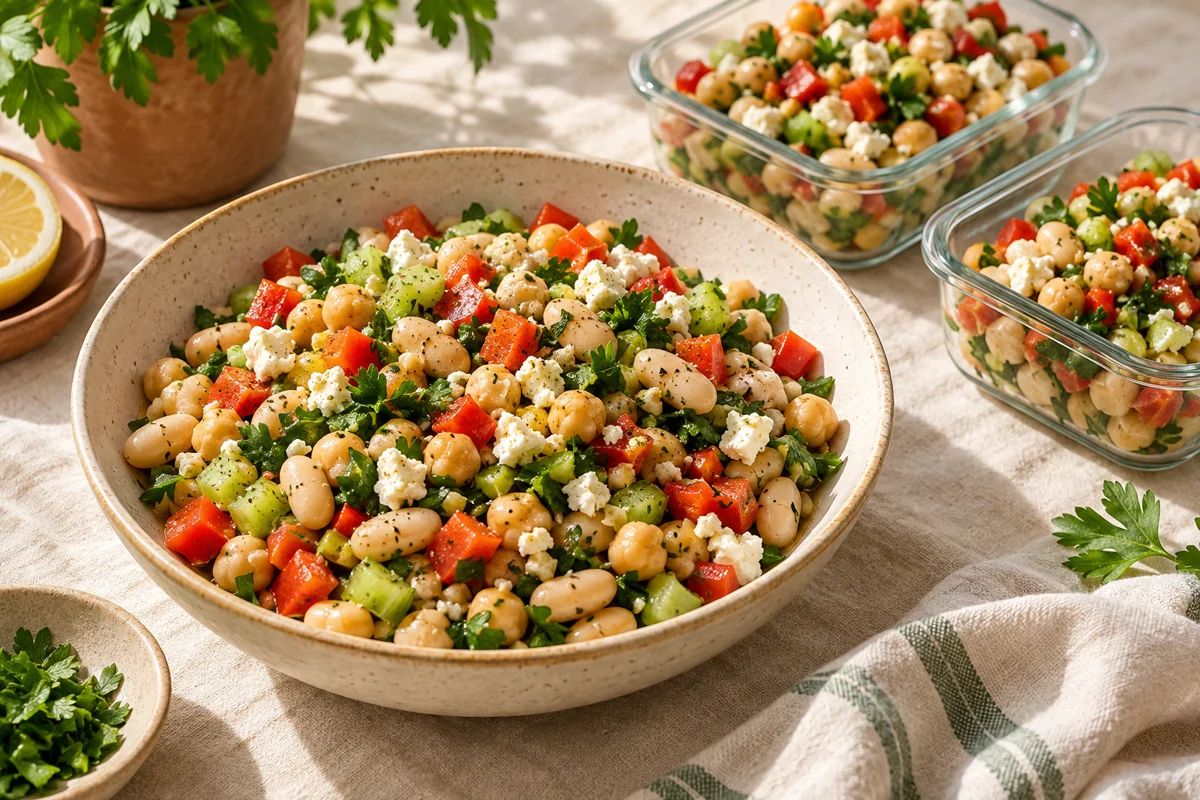
Beans and lentils are particularly adaptable: stir them into soup, serve them over rice, or mash them into a sandwich filling. If your meals usually revolve around meat, you can occasionally try a bean-based version for variety.
Make room for grains and starches
Rice, bread, pasta, oats, potatoes, and other starches can help make a meal satisfying. MyPlate recommends making at least half your grains whole grains. You can begin with one familiar swap, such as whole-grain toast or brown rice, and keep other options you enjoy.
Not every meal needs the same grain. A potato, tortilla, or bowl of noodles can fit your dinner just as readily as a carefully arranged grain bowl.
Include flavor and satisfying extras
A little olive oil, avocado, dressing, nuts, or cheese can change how a meal tastes and feels. Herbs, spices, lemon, salsa, and sauces give familiar ingredients a new direction. Dairy or a fortified soy alternative may fit alongside the meal depending on your preferences.
A meal that looks balanced but tastes dull is harder to repeat. Think about seasoning and texture as part of the plan, not an afterthought.
Three everyday examples
A rice bowl: Rice, black beans, sautéed peppers, shredded cabbage, and avocado with salsa. The food groups share the same bowl rather than staying in separate sections.
A sandwich lunch: Whole-grain bread with chicken or hummus, lettuce, and tomato. Add fruit and another vegetable if that fits your appetite.
A pasta dinner: Pasta with lentil tomato sauce, spinach, and a little Parmesan, plus a side salad. You can change the proportions and ingredients without losing the basic idea.
If you prefer a little more structure than building each meal on your own, you can also explore a guided weight-management meal plan as an optional next step. Choose an approach that fits your preferences and everyday routine.
Use the guide flexibly
Appetite, activity, culture, budget, and health needs all shape what belongs on your plate. This visual guide is not designed to prescribe calories or portions. Mixed dishes and family-style meals can still include a useful variety of foods.
Ask one helpful question: What could I add to this meal? A vegetable, a protein food, or a favorite sauce may make more difference than rebuilding the whole plate.
Start with one meal you already like. Add something that helps it feel more complete, and repeat when it works. Balanced eating can be ordinary, affordable, and enjoyable. If you would like to organize these ideas across a week, our simple seven-day meal plan offers a flexible starting point.
A few common questions
Can I adapt these ideas to my preferences?
Yes. These are flexible meal ideas. Adjust ingredients and portions to your appetite, budget, allergies, and any advice from your own care team.