Freezer Meals for One: Three Small Batches, One Portion at a Time
Prep single portions of soup, chili, and pasta sauce, with a compact freezer setup and practical thawing and reheating guidance.
Cooking for one does not mean every batch recipe is off limits. It means the unused portions need a plan before they become a week of the same dinner.
A freezer portion can be a complete bowl or simply the cooked component that makes dinner easy. Soup, chili, and pasta sauce are useful starting points because they pack compactly and do not rely on crisp vegetables staying crisp. Begin with one small batch and test whether you like the reheated result.
Make space before making food
Choose containers that hold a portion you will realistically eat. Check that they are freezer-safe and leave appropriate room for expansion. Flat freezer bags can save space for sauces, provided the bags are suitable and sealed securely.
Label each portion with the dish, preparation date, and anything that must be added at serving. “Lentil sauce; add pasta” is more helpful than an unlabeled red container. Keep a short freezer list on paper or your phone so the oldest portions are used first.
For refrigerated prep, our three-day meal prep for one is a different approach. Use the fridge for meals you will eat soon and the freezer for portions you have deliberately set aside.
Three forgiving meal formats
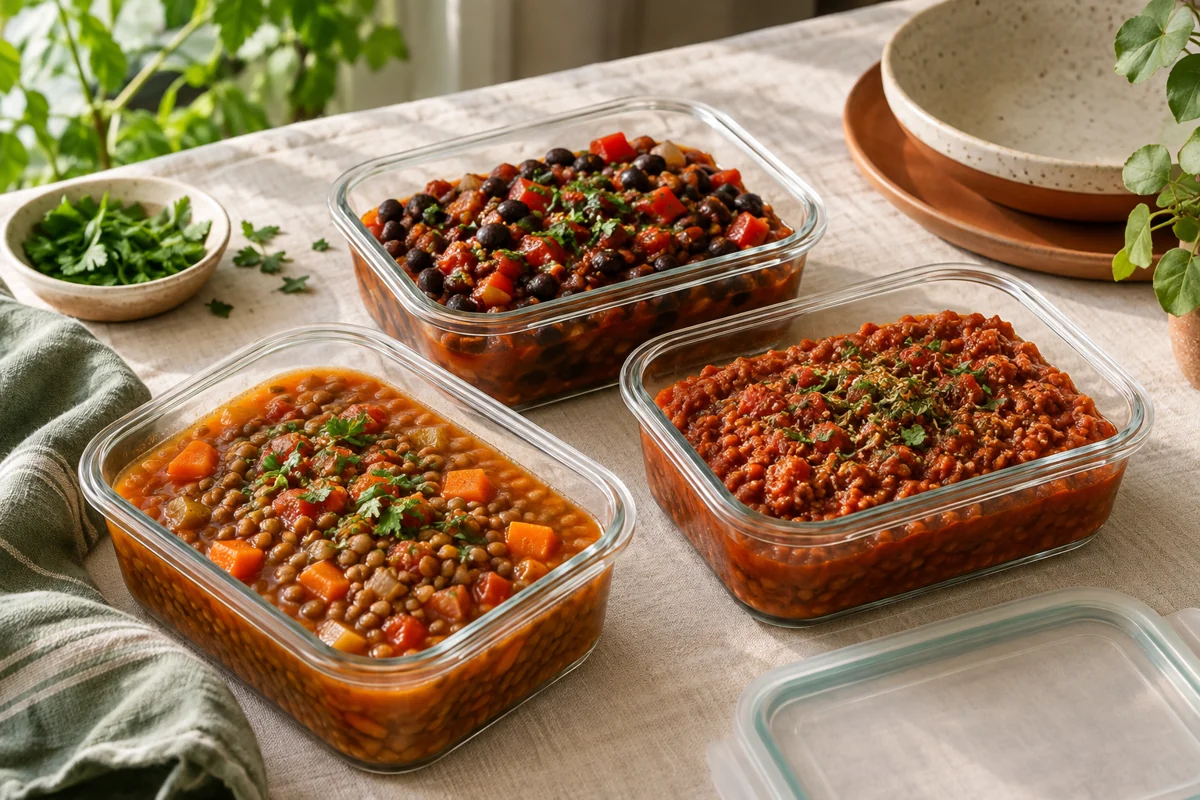
Tomato-lentil soup
For a modest batch, start with a small diced onion, two diced carrots, 1/2 cup dry brown or green lentils, a 14- to 15-ounce can diced tomatoes, and about 3 cups broth or water. Soften the onion and carrots in a little oil, add the remaining ingredients, and simmer until the lentils are tender. Add liquid as needed; lentil type and pot size affect the result.
This is an adaptable starting formula, not a kitchen-tested yield. Portion the actual finished soup rather than assuming it makes an exact number of servings. Freeze in single bowls and serve with bread. Avoid adding a large amount of delicate garnish before freezing; herbs can go on after reheating.
Black bean chili
Soften a diced onion and bell pepper with a little oil. Add two drained 15-ounce cans black beans, one 14- to 15-ounce can diced tomatoes, chili powder to taste, and enough water or broth to keep the mixture loose. Simmer until the vegetables are tender and the flavor comes together.
Mash a few beans if you prefer a thicker chili. Freeze portions of chili alone, then serve with rice, toast, or a baked potato. This uses less freezer space than packing every starch with the chili. Sour cream, avocado, and crunchy toppings belong at serving.
Lentil tomato pasta sauce
Cook a small batch of lentils until tender and drain as needed. Simmer them with a jar of tomato pasta sauce and sautéed diced onion or carrots. Adjust the sauce consistency with a little water, and portion it for individual meals.
Freeze the sauce separately from pasta if you care about fresh pasta texture. You can also use it over toast or alongside roasted vegetables, so the portion is not locked into one dinner. Our easy healthy dinner ideas include more ways to use beans and lentils in weeknight meals.
Cool, portion, then freeze
Do not put a deep pot of hot soup in the freezer and assume the center will cool quickly. Divide cooked food into shallow containers and cool it promptly using safe handling practices before freezing. Use clean utensils and keep counters and containers clean.
University of Minnesota Extension recommends suitable freezer packaging and reducing air exposure to help protect quality. Its guidance also explains that freezing can change texture. That is why this small plan focuses on sauces, soups, and chili rather than raw salad or fully dressed wraps.
Do not freeze leftovers that have already been held unsafely. Freezing is a storage tool, not a way to make mishandled food safe.
Plan thawing around your actual evening
Move one portion to the refrigerator the night before you need it when possible. Keep it in a container that catches leaks. For microwave thawing, use a microwave-safe container and continue reheating promptly; avoid a partly warm meal sitting around for later.
FoodSafety.gov recommends 165°F for reheated leftovers. Stir soups and sauces, allow heat to distribute, and use a food thermometer to check more than one spot. The lid feeling warm does not tell you the temperature of the center.
For freezer breakfast rather than dinner, see our breakfast burrito guide, which treats tortilla moisture and uneven reheating separately.
Put freezer quality on a schedule
FoodSafety.gov’s Cold Food Storage Chart distinguishes freezer quality guidance from safety when food stays continuously frozen at 0°F. Use its category-specific guidance alongside the packaging instructions for your ingredients; do not treat one homemade “best by” date as universal.
A practical routine is to use a freezer portion regularly before adding another batch. If your freezer fills faster than you eat from it, make fewer portions. Two dinners you can find and enjoy are more useful than ten containers you cannot identify.
A few common questions
Should I freeze the entire meal or just the sauce?
Either can work. Sauce-only portions use less space and let you cook fresh pasta or another starch when serving. Label containers clearly so you know what still needs to be added.
Can I thaw a meal on the counter?
Use a safe thawing method instead, such as the refrigerator. If using a microwave to thaw, continue with reheating promptly and check the food is hot throughout.