Healthy Grocery List on a Budget: A Simple Week of Meals
Build a flexible budget-friendly grocery list with affordable proteins, produce, pantry staples, and seven easy meal combinations.
A healthy grocery list doesn’t need specialty powders, a perfect meal-prep routine, or an expensive cart full of ingredients. It needs foods you like, enough flexibility for a busy week, and a plan to use what you buy.
This guide is built around everyday U.S. grocery-store options: oats, eggs, beans, lentils, rice, frozen vegetables, seasonal fruit, and a few flavorful extras. Prices vary widely by store, season, and location, so there is no universal dollar total. The goal is to make your own budget stretch further—not to promise a particular cost or weight-loss result.
If you want a visual framework for combining these foods, start with our balanced plate guide.
Start with your kitchen, not the store
Before writing a shopping list, open your pantry, fridge, and freezer. Note any rice, pasta, canned tomatoes, beans, vegetables, or proteins that need to be used. Then choose three or four meals that share ingredients.
A bag of carrots can work in soup, a rice bowl, and a crunchy lunchbox. Plain yogurt can be breakfast, a dip, or a sauce. Repeating ingredients is not the same as eating identical meals.
The flexible grocery list
Choose from each group rather than buying everything at once.
Affordable protein foods
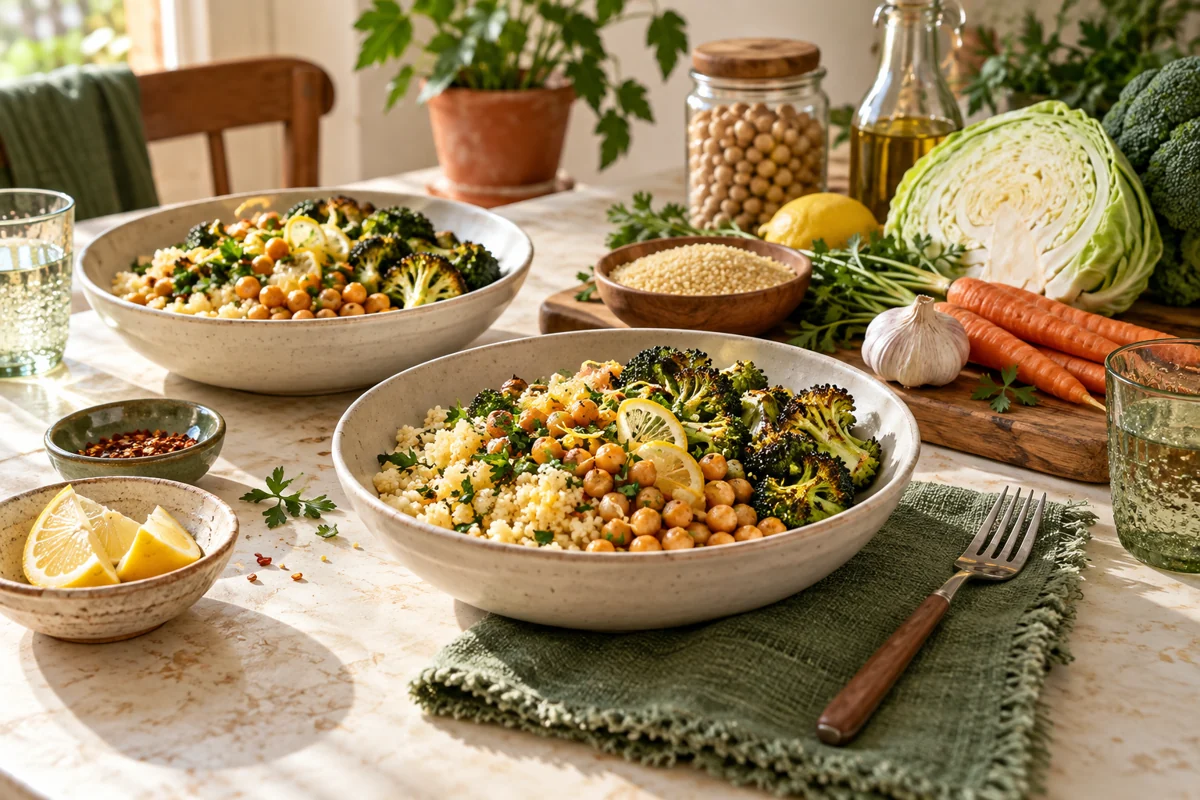
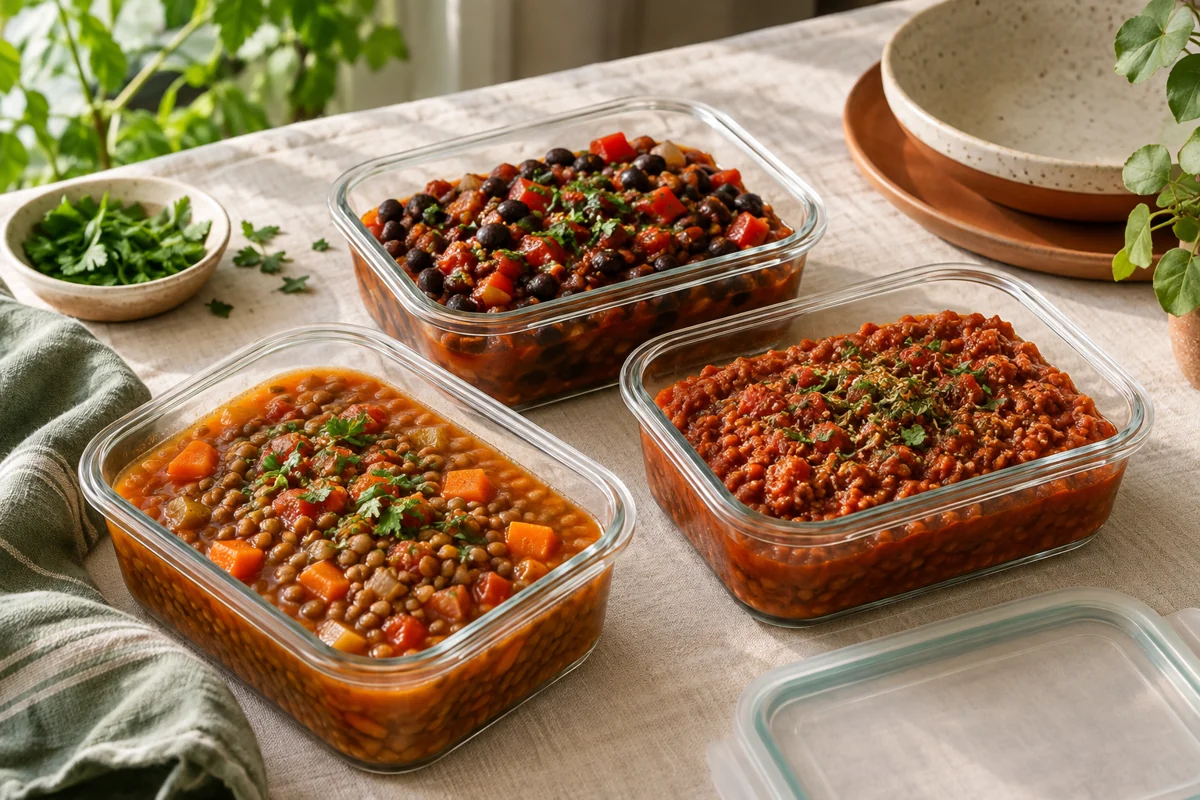
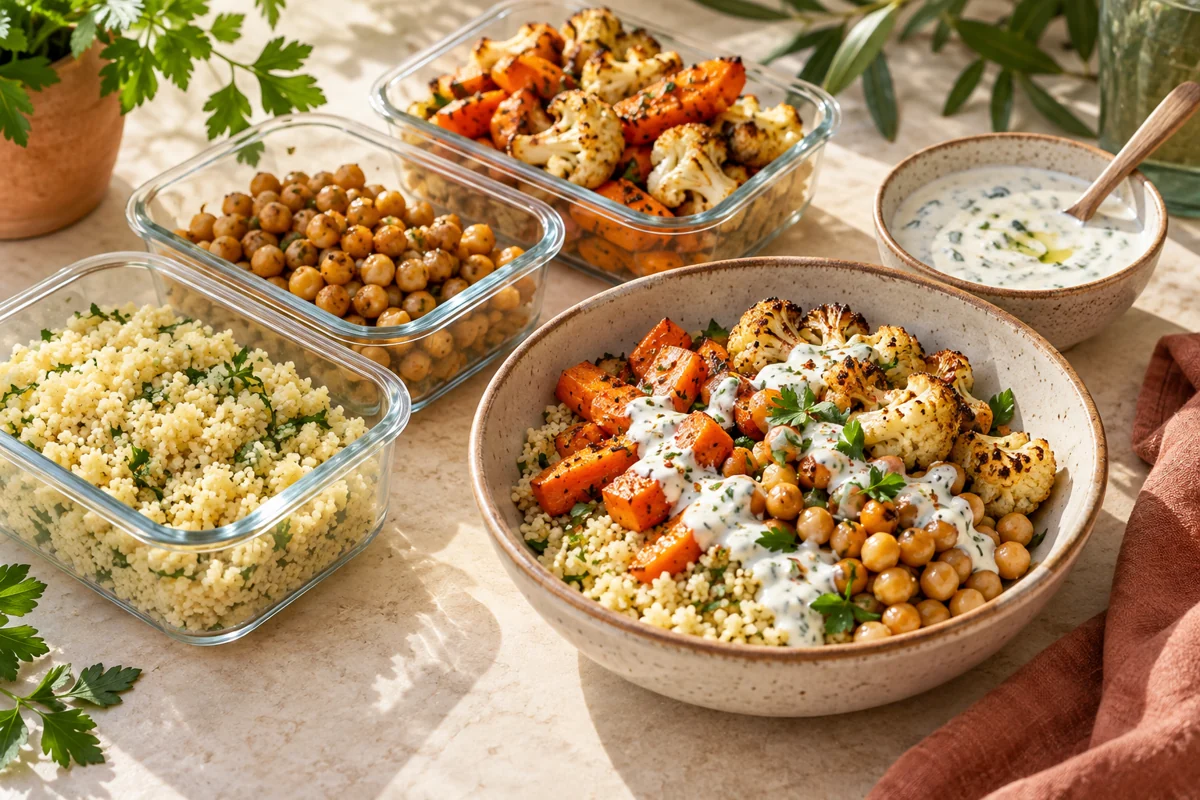
- Dry or canned lentils and beans: Useful for soups, chili, tacos, and grain bowls. Rinse canned beans if you prefer less sodium.
- Eggs: Handy for breakfast, sandwiches, and quick skillet meals when they fit your dietary needs and local prices.
- Plain yogurt: Works with oats and fruit or as a savory dressing; compare package sizes and unit prices.
- Tofu: Often an economical option for stir-fries and rice bowls, depending on your store.
- Canned fish or poultry: Shelf-stable choices for sandwiches and salads; compare prices and follow fish-consumption guidance where relevant.
If meat is part of your routine, compare the price per pound of different cuts and consider freezing portions when safe. Protein can also come from a mix of plant foods over the day. For more ideas, see our high-protein lunch collection.
Vegetables and fruit
- Frozen broccoli, peas, spinach, or mixed vegetables: Use just what you need and return the rest to the freezer.
- Carrots, cabbage, or onions: Versatile additions to several dishes.
- Seasonal fruit: Choose what is affordable and appealing locally.
- Canned tomatoes: A base for soups, chili, and pasta sauce.
Fresh, frozen, and canned produce can all have a place in a balanced eating pattern. Choose versions that suit your taste and storage space.
Grains and filling staples
- Rolled oats: Breakfast, overnight oats, or a quick snack base.
- Rice or another familiar grain: An adaptable side for beans, tofu, and vegetables.
- Whole-grain bread or tortillas: Useful for packed lunches and fast dinners.
- Pasta or potatoes: Convenient options for turning leftovers into a meal.
Whole grains can add variety and fiber, but you do not have to replace every familiar food at once.
Flavor builders
Pick two or three that you already use: olive or another cooking oil, peanut butter, lemon, vinegar, garlic, dried spices, salsa, or mustard. A small amount of something flavorful can make repeated ingredients feel different.
Seven meal combinations from one flexible basket
These are mix-and-match examples, not a rigid calorie plan. Adjust portions and add sides according to your appetite.
| Day | Easy meal idea | Ingredients to reuse |
|---|---|---|
| Monday | Lentil and tomato soup with toast | Lentils, carrots, onion, tomatoes |
| Tuesday | Rice bowl with beans, cabbage, and salsa | Rice, beans, cabbage |
| Wednesday | Vegetable and egg scramble with potatoes | Eggs, frozen spinach, potatoes |
| Thursday | Pasta with tomato sauce and white beans | Pasta, tomatoes, beans |
| Friday | Tofu and broccoli stir-fry over rice | Tofu, frozen broccoli, rice |
| Saturday | Yogurt bowl with oats and fruit | Yogurt, oats, fruit |
| Sunday | Leftover vegetable soup or bean tacos | Remaining vegetables, beans, tortillas |
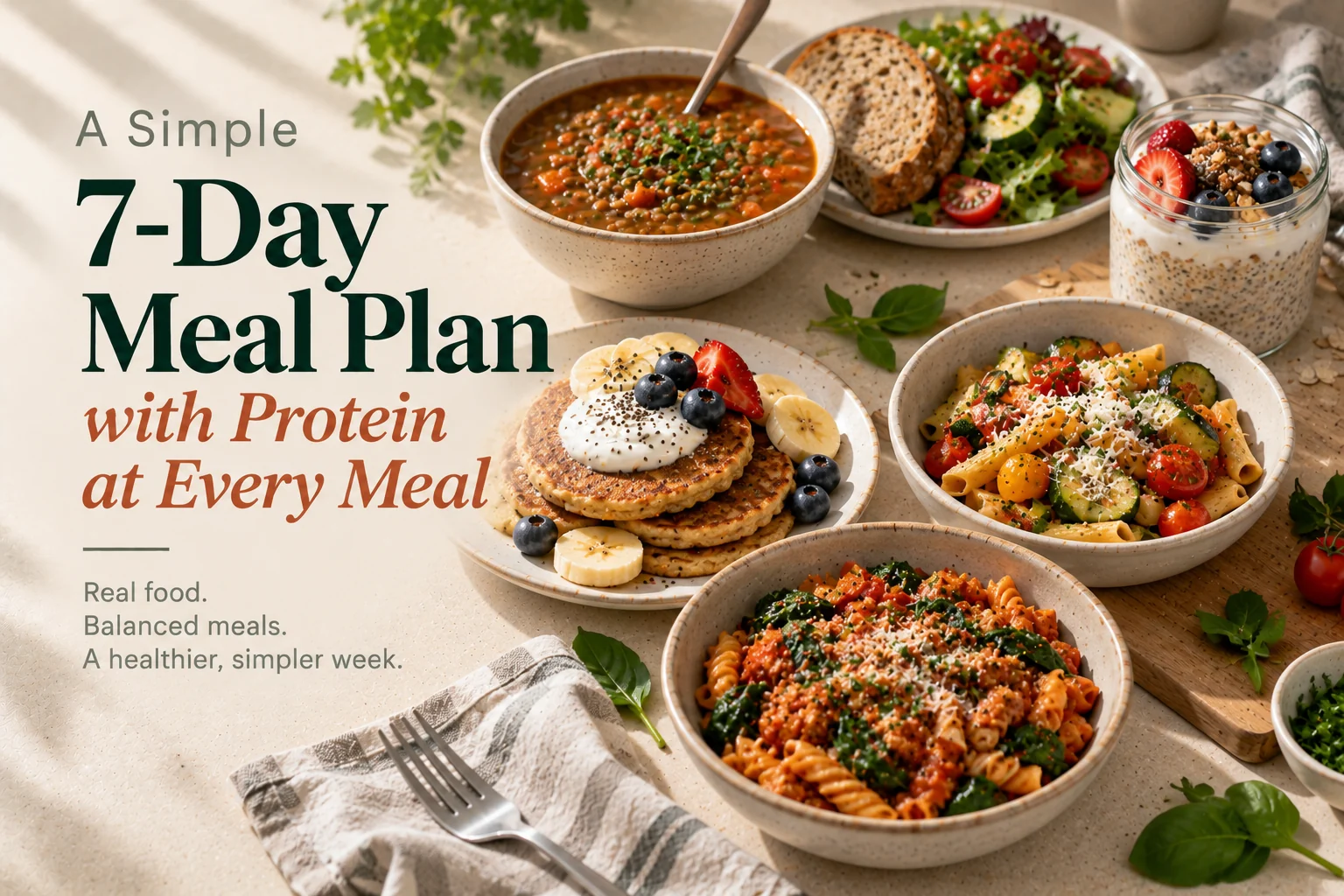
Not every meal needs to be cooked from scratch. Leftovers, sandwiches, and quick assembled plates are part of a realistic routine. Our seven-day meal plan offers more breakfast, lunch, and dinner combinations.
Five ways to spend less without making meals boring
1. Compare unit prices
The lowest shelf price is not always the lowest cost per serving. Check price per ounce or pound, especially when comparing yogurt, oats, rice, and frozen vegetables. The larger package is only a bargain if you will use it.
2. Pick meals before buying ingredients
A list of healthy foods is not yet a meal plan. Decide how your beans, vegetables, and grains will become lunches and dinners so less food gets forgotten in the fridge.
3. Keep one freezer-friendly backup
A portion of lentil soup, chili, or cooked beans can rescue a busy evening. Cool and refrigerate cooked foods promptly, and freeze portions you will not use within the recommended storage window.
4. Use one ingredient in more than one way
Cabbage can be slaw, stir-fry, or taco filling. Yogurt can be breakfast or a sauce. This reduces the number of half-used packages you need to manage.
5. Leave space for foods you enjoy
A plan that looks inexpensive on paper but doesn’t match your tastes can lead to unused groceries and extra takeout. Familiar meals are a sensible starting point.
A quick food-safety reminder
Refrigerate perishable foods promptly. USDA guidance generally recommends refrigerating cooked leftovers within two hours (one hour in temperatures above 90°F / 32°C), using refrigerated leftovers within three to four days, and reheating them to 165°F / 74°C when appropriate. Follow package instructions and keep cold foods cold during transport.
Make this list your own
Try planning just three dinners and two lunches before you shop. Write down the shared ingredients, check your pantry, and buy only what you need. You can build from there.
If you would prefer a more structured approach, you can explore an optional guided meal-planning resource. This is a sponsored partner link; Wellorio may earn a commission if you use it. Review the details and decide whether the approach suits your preferences and needs.
Budget-friendly eating is less about finding one perfect grocery list and more about making the foods you already like work together throughout the week.
A few common questions
Is frozen produce as useful as fresh produce?
Frozen vegetables and fruit can be convenient options. Choose varieties that fit your meals, preferences, and budget, and check labels for added sauces or sugar when relevant.
Do I need to buy everything on the list?
No. Treat this as a flexible template. Check what you already have, pick a few meals you actually enjoy, and buy only the ingredients you will use.