Meal Prep for One: Three Days of Meals Without a Full Fridge
Build a small three-day meal-prep routine with overlapping ingredients, flexible portions, and a simple plan for leftover groceries.
Meal prep for one often goes wrong at the shopping stage. A recipe says “serves four,” you buy the ingredients anyway, and the fridge fills with food you do not want to repeat four times.
Start with three days and one meal slot. The goal is a small set of useful components, not nine identical boxes. Our beginner meal-prep guide explains the basic approach; this version makes the quantity and leftover decisions more explicit for one person.
Pick the meal that needs help
If lunch is the problem, prep lunches. If dinner is the problem, choose three dinner combinations. You can use the same components for either, but do not count one prepared serving as both lunch and dinner.
Before shopping, check your calendar. A dinner out or a work lunch changes how much food you need. Look in the fridge and freezer, then decide which open ingredients must be used first. FDA’s food-waste guidance recommends checking what you have and planning purchases around realistic needs.
A small starting batch
For three main-meal bases, buy or set aside:
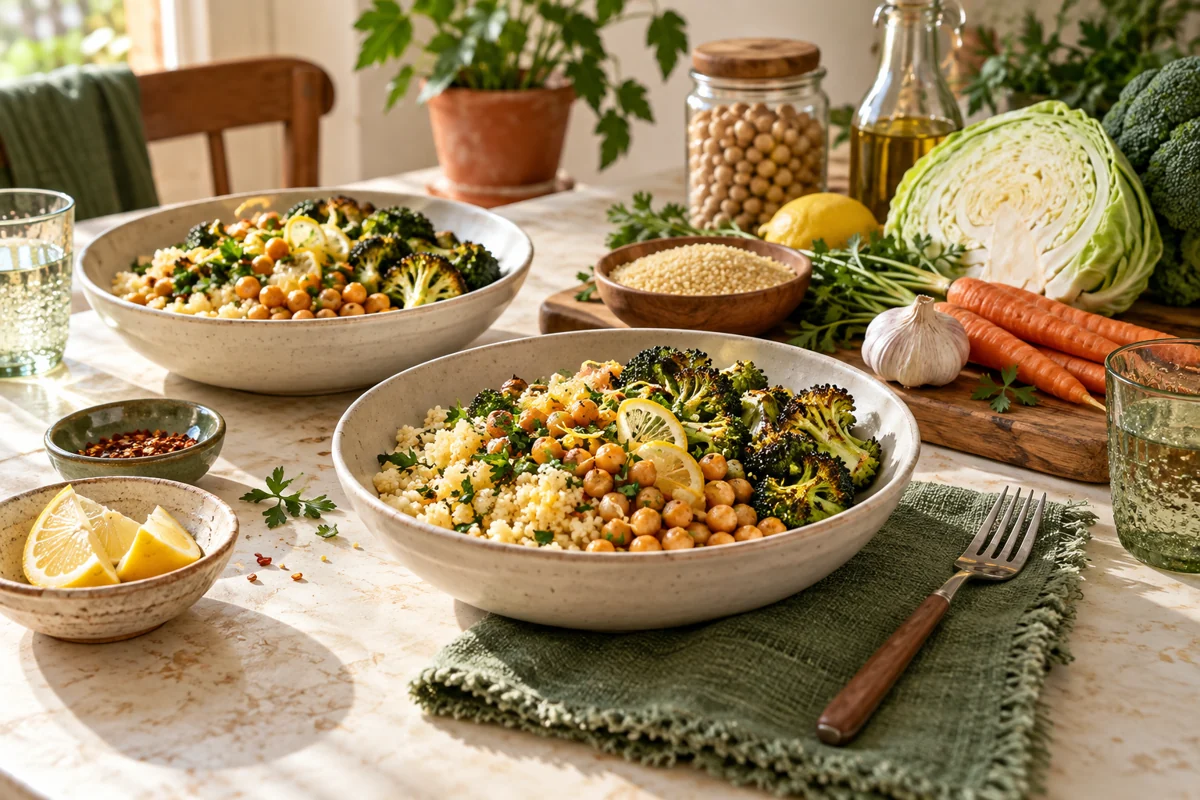
- 3/4 cup dry couscous
- 1 15-ounce can chickpeas, drained and rinsed
- 3 medium carrots
- About half a small cauliflower
- 1/2 cup plain yogurt
- 1 lemon
- Olive oil, salt, pepper, and a spice you already enjoy
This is a component batch, not a complete prescription for three equal meals. You may need more food depending on appetite. Bread, extra beans, tofu, nuts, or another side can make an individual serving more substantial.
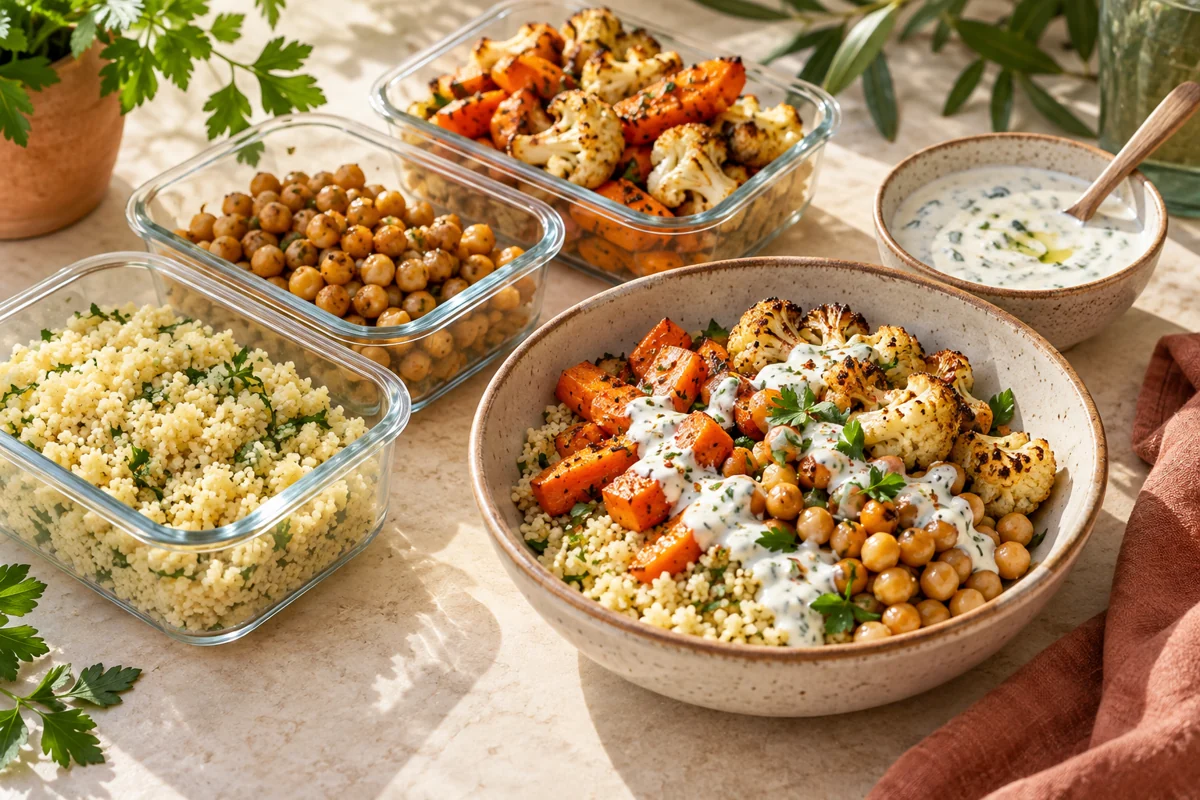
Cook the couscous according to its package; brands differ in water requirements and cooked yield. Chop the carrots and cauliflower into reasonably even pieces, toss with a little oil and seasoning, and roast until tender with some browned edges. Use your usual roasting method and check the vegetables as they cook rather than relying on an untested exact time.
Mix the yogurt with a little lemon juice and a pinch of salt. Keep the sauce separate. Portion the cooked components into shallow containers and refrigerate promptly.
Turn the batch into three different meals
Day one: warm grain bowl. Reheat a portion of couscous, chickpeas, and vegetables appropriately. Add yogurt sauce after heating. Finish with pepper and lemon zest. Keep the remaining containers cold while assembling the meal.
Day two: chickpea pita. Mash part of the chickpeas with yogurt sauce and tuck into a pita with roasted vegetables. Serve some couscous on the side if you want it. Assemble just before eating so the bread does not absorb the sauce all morning.
Day three: crisp-edged vegetable plate. Warm the remaining roasted vegetables in a skillet and serve alongside couscous and chickpeas, with sauce on the side. Add a slice of toast or another protein food if the remaining portions are small.
These meals share ingredients without needing to look identical. If you want lunches that work cold, use our no-reheat work lunch ideas instead of assuming every prepared dinner will be pleasant straight from the fridge.
Give the unused half a destination
A partial cauliflower is only economical if you use it. Roast the remainder for another meal, buy a smaller amount, or choose frozen cauliflower so you can take what you need. Plan carrots into a snack or another dinner rather than buying a bag with no next use.
Use remaining yogurt for breakfast or sauce while following its label. Freeze bread in usable portions if you rarely finish a loaf. A lemon can flavor another meal; zest it before cutting if you want both zest and juice.
If a recipe needs one specialty ingredient that you will not use again, look for a different recipe. Small-household cooking gets easier when the grocery list reflects your routine, not an idealized version of it.
Use a short storage timeline
USDA advises refrigerating perishable leftovers promptly and generally using refrigerated leftovers within three to four days. Count from the original cooking time, including any older component you add. Mixing yesterday’s vegetables into today’s bowl does not restart their storage clock.
Label containers with the preparation date and freeze a portion early if your plans change. Do not use appearance or smell as proof of safety. For meals designed around individual freezer portions, see our freezer meals for one.
Build the next batch from what happened
At the end of three days, note what ran out and what remained. Increase the component you actually wanted more of; reduce the ingredient you kept avoiding. This is more useful than copying a large batch plan again and hoping your appetite changes.
Once three days feels manageable, repeat the process with a different grain, a different bean, or another vegetable. You do not need a bigger fridge or a complicated spreadsheet to make the next week easier.
Want a little more planning structure?
If choosing combinations is the part that slows you down, a partner meal-planning service may be worth comparing. Check that its portions, food preferences, and pricing fit your household.
Explore the partner meal-plan option
Partner link: Wellorio may earn a commission if you use this link. Review the provider’s details, costs, and terms before choosing a plan.
A few common questions
Do I need to prep breakfast, lunch, and dinner?
No. Start with the meal that causes the most friction, such as work lunch. Keep easy breakfasts and one or two fallback dinners separate from the prep project.
Can I make this vegetarian?
The sample component batch is vegetarian as written. Use beans or tofu when adapting other meals, and choose dairy-free sauce if needed.