Protein Snacks for Work When You Don’t Have a Fridge
Build a practical desk snack drawer with shelf-stable protein foods, label checks, useful pairings, and clear distinctions between unopened and chilled foods.
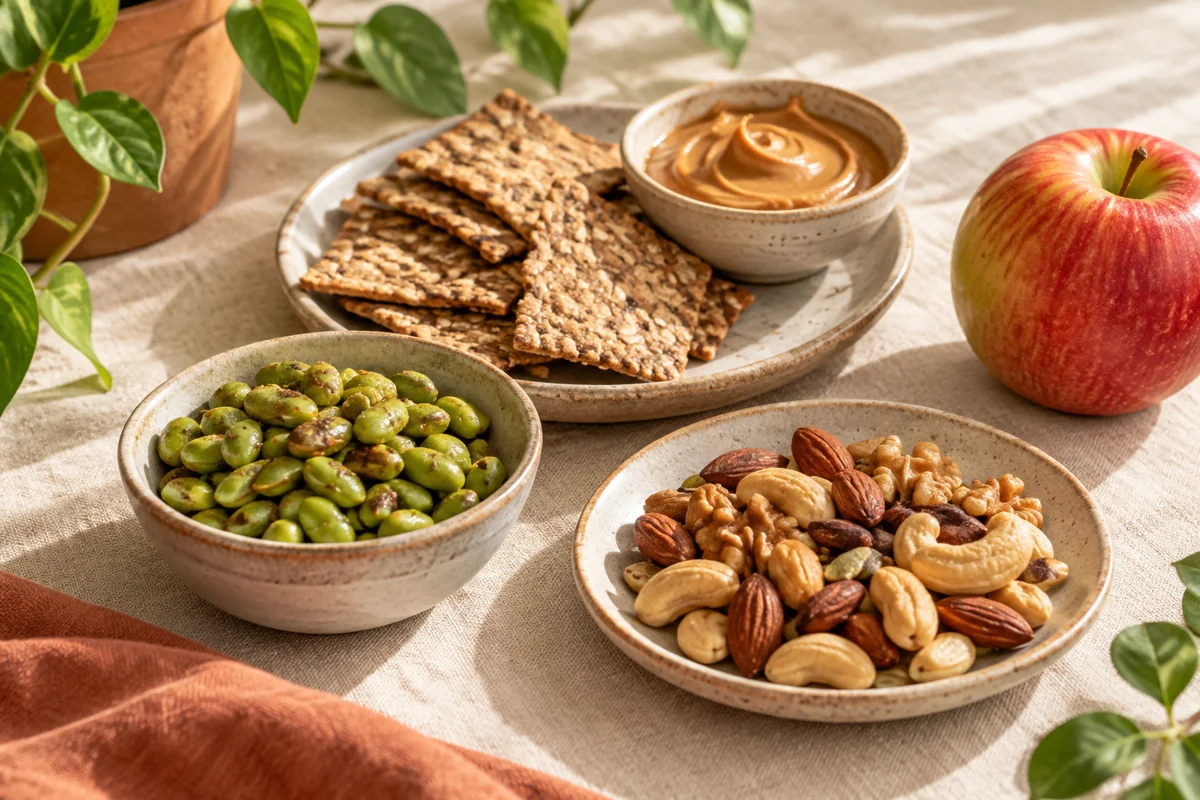
A useful desk snack is one you can actually keep at work. Yogurt and eggs may be convenient at home, but they are not solutions for a drawer with no refrigerator nearby.
Start with products that are labeled for room-temperature storage. Then think about how much food you want, whether you need utensils, and what you enjoy eating between meetings. Our everyday snack guide covers the broader question of when a snack is useful; this guide is about the storage problem.
Read the storage instruction before the protein number
Shelf-stable usually refers to a product that can be kept unrefrigerated before opening. USDA notes that some canned foods still require refrigeration, so a can or pouch alone is not proof. Read the packaging and follow any instructions after opening.
A cool, dry drawer is different from a hot car. Keep products away from heat and direct sun, use intact packaging, and do not assume every protein bar or meat snack has identical storage requirements. If the label says keep refrigerated, choose something else for the drawer.
Seven options that can work
1. Commercially dry-roasted edamame
Look for a packaged, ready-to-eat product with shelf-storage instructions. The crunchy texture works on its own or mixed with crackers. Compare the protein listed for the serving you expect to eat, not just the largest number on the front.
This is not the same as thawed frozen edamame, which needs cooking according to its package and appropriate chilled storage afterward.
2. Nuts and a whole piece of fruit
Almonds, peanuts, pistachios, or a mixed handful can sit alongside an apple or orange. Choose a combination you like; nuts are not interchangeable gram for gram. Keep them sealed and rotate the drawer so old bags do not disappear behind newer ones.
If nuts are restricted in your workplace or unsuitable for allergies, consider a packaged seed option. Check the label for cross-contact information when that matters.
3. Peanut butter with crackers
A single-serve packet can be easier than an open jar when you eat away from the kitchen. Spread it on whole-grain crackers or pair it with a whole banana. For jars and seed butters, follow the actual storage directions rather than assuming all varieties can stay open at room temperature.
Bring a reusable spoon if the packet is awkward. A snack that is technically portable but leaves your keyboard covered in peanut butter is not the best fit for a desk.
4. Commercially roasted chickpeas
Choose a dry packaged product designed for shelf storage. Flavor options range from lightly salted to spicy. Pair it with crackers or dried fruit if you want more than a crunchy handful.
Home-roasted canned chickpeas are a different product. Without a validated drying and storage process, do not promise they can live in a desk drawer for weeks.
5. A protein bar you enjoy
Check storage requirements, allergens, protein per serving, and serving size. A bar does not have to win a nutrition contest to be useful. If you find certain ingredients uncomfortable to eat, choose a different bar rather than forcing a product because its protein number is higher.
The FDA explains that a label serving size describes the amount typically consumed, not a recommendation for how much you personally should eat. Use it to interpret the numbers, then choose an amount that fits your day.
6. Shelf-stable jerky
Choose a product explicitly labeled for shelf storage and follow its instructions after opening. Small sealed portions are useful if you rarely finish a larger bag. Check sodium when you are comparing products, and pair the jerky with fruit or crackers if you want a more substantial snack.
Jerky is not a reason to leave deli meat in a drawer. Refrigerated meat snacks and dry shelf-stable products have different requirements.
7. An unopened fish or bean pouch for a bigger snack
A ready-to-eat shelf-stable pouch can work when your snack needs to be closer to a small meal. Confirm that it can be eaten without heating. Bring crackers and a fork, and open it when you are ready to eat rather than mixing it into a container at home and leaving that container unrefrigerated.
This option is better for a lunch table than a shared meeting room if smell or mess would bother others. The finished opened food is no longer an unopened shelf-stable product.
Build a drawer with three roles
Pick one crunchy protein food, one spread-and-cracker option, and one sealed backup. That might mean roasted edamame, peanut butter packets, and a bar. Add whole fruit on the days you want it.
Buy a small quantity first. If an item remains untouched for several weeks, the drawer has told you something useful: you probably prefer a different option. Keep food in its packaging so the storage and allergy instructions stay available.
When a snack is not the answer
If lunch is regularly too small or too late, a better-packed meal may help more than a larger snack drawer. See our cold protein-focused work lunches and use the balanced plate framework to build a lunch that fits your appetite.
A desk snack is a convenience, not a required eating schedule or a weight-loss technique. Keep the options that make your day easier and leave the rest.
A few common questions
Can I leave string cheese or yogurt in my desk drawer?
No. These are refrigerated foods, not shelf-stable desk snacks. Follow their cold-storage instructions.
Are homemade roasted chickpeas shelf-stable?
Do not assume they are equivalent to a commercially dried product. Their moisture and storage conditions differ; choose a packaged product labeled for shelf storage when you need an unattended desk snack.