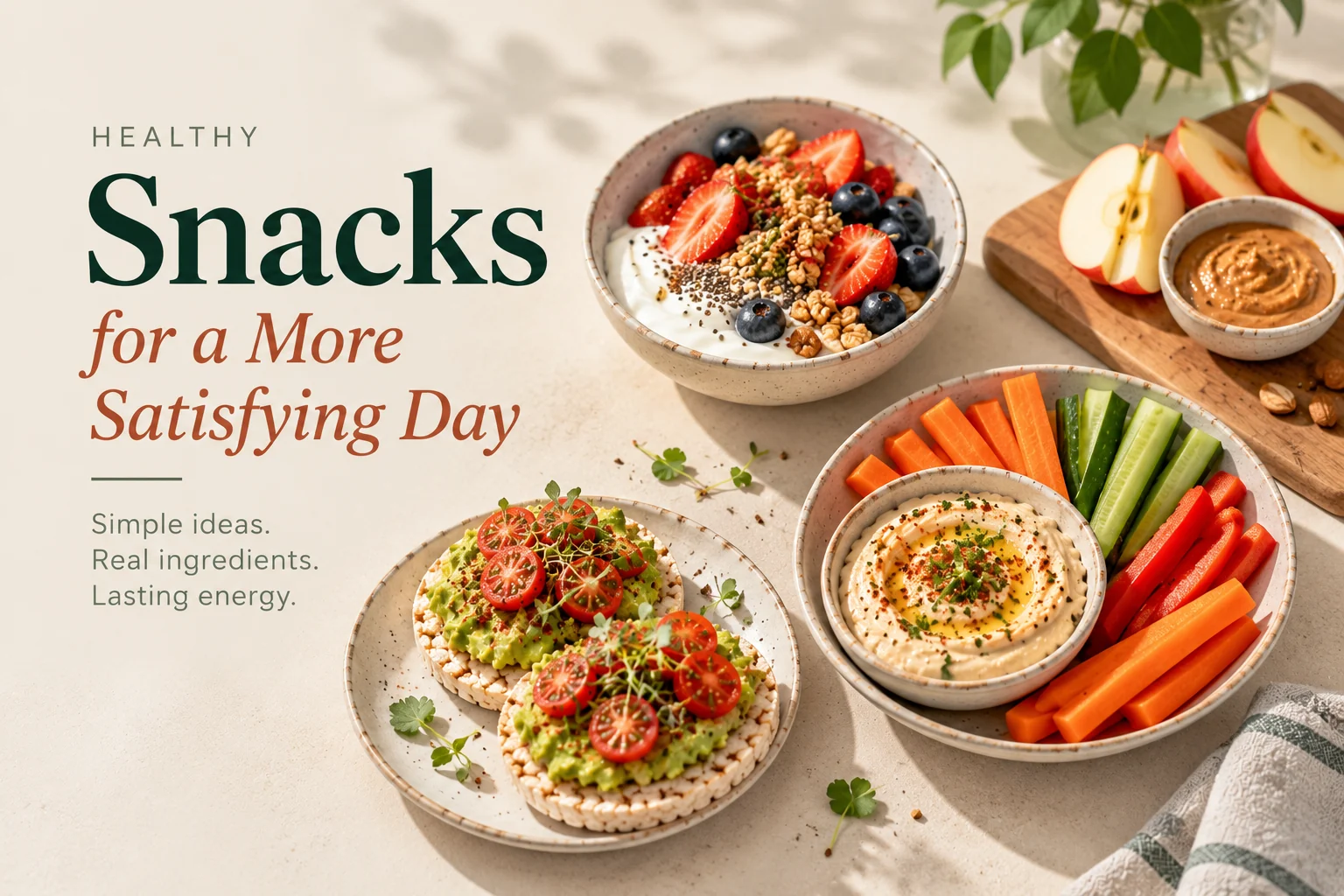
Healthy Snacks for a More Satisfying Day
Simple snack pairings and gentle planning tips for busy days—without labeling foods as good or bad.
Snacking can be part of a balanced eating pattern. Some people prefer three larger meals; others feel better with a snack between them. There is no single schedule that fits everyone, and no snack guarantees weight loss.
If you are exploring weight management, focus on habits you can repeat and how food fits your day. A snack is useful when it helps you bridge a gap between meals or enjoy something you want—not when it becomes another rule to follow.
Pair foods for variety
Combining two foods can add flavor, texture, and a broader mix of nutrients. These pairings are easy to adjust:
- An apple and peanut butter. Slice the apple and spoon the peanut butter into a small dish. Seed butter is another option when appropriate for allergies.
- Yogurt and berries. Use fresh fruit or thawed frozen berries. Choose a yogurt you like and check the label if you are comparing protein amounts.
- Hummus, vegetables, and crackers. Carrots or cucumbers add crunch; crackers or pita make the snack more substantial.
- Cheese and a pear. A familiar combination that needs little preparation. Use a dairy-free alternative if preferred.
- Roasted chickpeas and fruit. Canned chickpeas can be drained, dried, seasoned, and roasted until crisp. Cool them before packing.
- An egg and toast. This works when you need something closer to a small meal.
- Nuts and dried fruit. Keep a combination you enjoy in a sealed container. Portions can vary with your appetite and the rest of your day.
- Edamame and whole-grain crackers. Cook edamame according to the package and keep it refrigerated until eating.
If you would rather have your meals and snacks organized into a clearer routine, you can explore a guided weight-management meal plan for a more structured approach.
Notice the reason you want a snack
A long gap between meals, an active afternoon, or a smaller lunch can leave you hungry. Sometimes you want food for enjoyment or comfort. You do not need to judge the reason before you are allowed to eat.
If you repeatedly arrive at dinner very hungry, try a more substantial lunch or an afternoon snack. If a snack does not appeal to you, you do not have to eat one because a schedule says so. Medical conditions and medications can change what is appropriate; seek individual guidance when needed. If mornings are the trickiest part of your routine, our protein-focused breakfast ideas offer a few more substantial starting points.
Make the convenient choice available
Keep two options at work, in the fridge, or in your bag. Shelf-stable choices might include nuts, crackers, and whole fruit. Yogurt, cooked eggs, hummus, and cut produce need appropriate cold storage.
Think about the actual setting. A desk snack can use a spoon; something eaten between errands should be simple to carry. For chilled foods, use an insulated bag and cold packs rather than leaving them in a warm car.
Where treats fit
Cookies, chips, or another favorite can fit into your day. You do not need to replace every food you enjoy with a version marketed as healthy. If you want, pair a favorite treat with another food to make the snack more satisfying.
Try one small change: Pack an afternoon option on the days when lunch and dinner are far apart. Notice whether it helps your routine, then adjust.
Keep the bigger picture gentle
Weight is influenced by many factors, and a snack list cannot tell you what your body needs. Sleep, movement, stress, access to food, medications, and health history can matter. Sustainable habits deserve more attention than promises about a single food. For the meals around your snacks, use our balanced plate guide as a flexible visual reference.
If food choices or weight concerns are causing distress, a qualified clinician or registered dietitian can offer individualized support. General ideas should make eating easier, not make you feel watched by your own plate.
A few common questions
Can I adapt these ideas to my preferences?
Yes. These are flexible meal ideas. Adjust ingredients and portions to your appetite, budget, allergies, and any advice from your own care team.