Overnight Oats Without Protein Powder: A Creamy Yogurt Base
Make overnight oats with Greek yogurt, milk, and rolled oats. Get a two-serving base, three flavor ideas, and fixes for oats that turn watery or too thick.
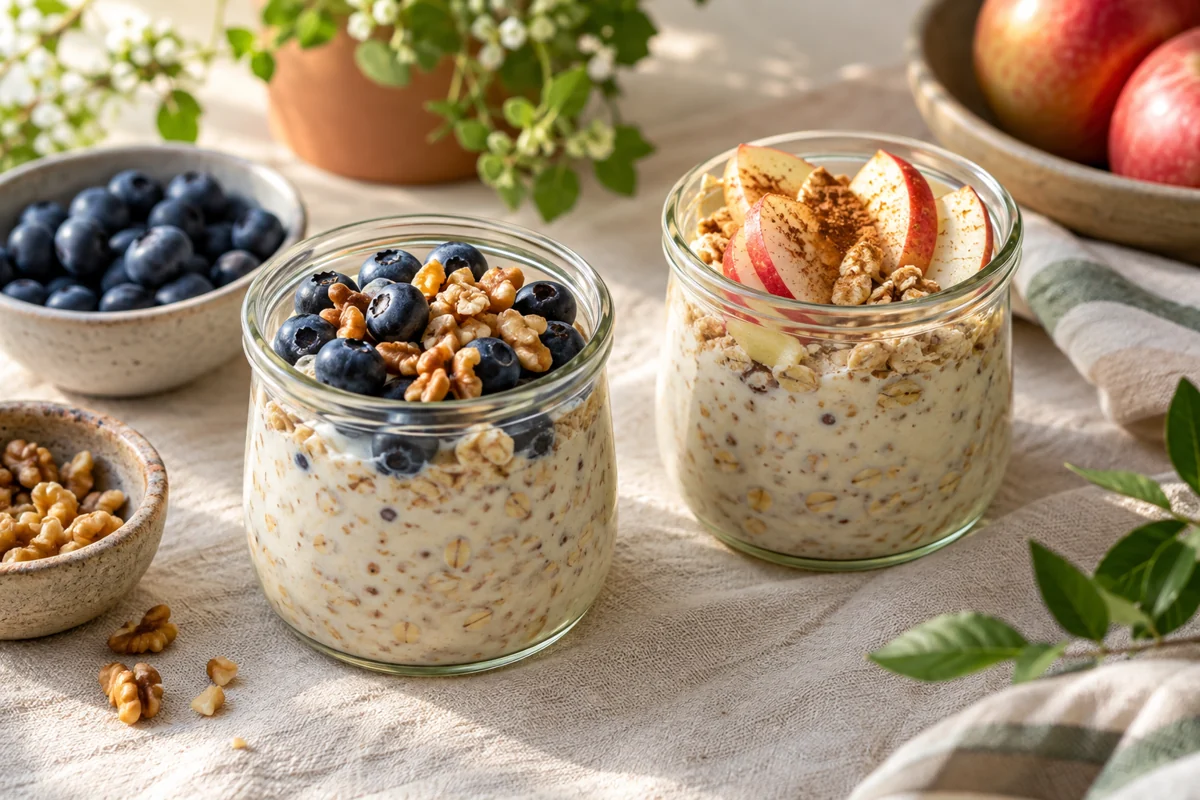
Protein powder is not a requirement for overnight oats. Greek yogurt and milk give a simple oat base a creamy texture, and you can adjust the toppings to suit your breakfast rather than a supplement flavor.
The useful starting point is a base you can repeat. Make two modest jars first, check the texture the next morning, then decide whether you want more oats, more liquid, or a different topping. For other breakfast formats, browse our high-protein breakfast ideas.
A two-serving base
You will need:
- 1 cup old-fashioned rolled oats
- 1 cup plain Greek yogurt
- 3/4 cup milk of your choice, plus extra to loosen the oats
- 1 tablespoon chia seeds, optional
- 1 teaspoon vanilla extract, optional
- A small pinch of salt
Stir everything together in a bowl until no dry pockets remain. Divide between two containers with lids, leaving room for toppings. Refrigerate overnight. In the morning, stir well and add a splash of milk if the mixture is thicker than you like.
This makes two starting portions, not two prescribed breakfast sizes. Add more food if your appetite calls for it. A smaller jar may be enough alongside another breakfast food; a larger serving may suit a different morning.
If you omit chia seeds, start with a little less milk and adjust after chilling. Chia adds thickness, so removing it changes the consistency. It is optional, not an ingredient you need to buy just for this recipe.
Three ways to finish the same base
Blueberry and walnut
Add about 1/3 cup blueberries and 1 tablespoon chopped walnuts to each jar just before eating. Frozen blueberries also work, but they release liquid as they thaw. Stir them in the morning if you want the cleanest-looking layers.
Keep the walnuts separate overnight so they stay crisp. A drizzle of maple syrup is optional; taste the oats before adding it.
Apple and cinnamon
Top each portion with half a small diced apple and a pinch of cinnamon. Dice the apple in the morning for the freshest texture. If you prefer softer fruit, quickly cook chopped apple in a small pan with a splash of water, cool it promptly, and refrigerate it separately.
A spoonful of peanut butter can round out the flavor. Stir it into the base if you prefer a smooth texture, or add it on top when serving.
Banana and peanut butter
Stir 1 tablespoon peanut butter into each portion and add half a sliced banana just before eating. A little milk helps loosen thicker nut butter. Cinnamon or a small amount of cocoa powder changes the flavor without changing the basic method.
Banana slices tend to soften and darken overnight, so this version is easier when the fruit is added at breakfast.
Fix the texture before making a bigger batch
Too thick: Stir in milk one tablespoon at a time. Yogurt thickness and chia absorption vary; the same measurements can feel different with another brand.
Too watery: Use less milk next time, especially if you add thawing frozen fruit. For the current jar, stir in more yogurt. Adding dry oats immediately before eating leaves a chewy texture, so give any extra oats time to soften in the refrigerator.
Too tangy: Choose a yogurt you like eating plain, or balance the flavor with ripe fruit and a little sweetener. More sweetener cannot fix a yogurt flavor you dislike.
Too bland: A pinch of salt, vanilla, cinnamon, or toasted nuts is often more useful than another large topping list.
Protein depends on the ingredients you buy
Dairy milk, soy milk, and other plant drinks have different protein amounts. Greek yogurts also vary by brand and serving size. A dairy-free substitution can work for texture without matching the original ingredients nutritionally.
For a label-based estimate, add the protein listed for the actual quantities of yogurt, milk, oats, and toppings, then divide by your actual number of portions. FDA explains that Nutrition Facts values refer to the listed serving, so do not use the whole-container amount for a smaller scoop. This recipe has not been independently analyzed for nutrition.
If you prefer savory breakfasts on other days, rotate in tofu, beans, or another breakfast you enjoy. Variety can make a repeatable breakfast routine easier to keep using.
Keep the batch small
Store the jars covered in a refrigerator at 40°F or below, as recommended by FDA. Use clean containers and follow the storage directions on the ingredients you use. Make a small batch you expect to eat promptly rather than assuming every combination keeps for a full week.
Pack jars cold if you take them to work. The yogurt-and-milk mixture is perishable, even though the oats began as a dry pantry food. Add fragile fruit and crunchy toppings when serving.
For a larger prep routine, the beginner meal-prep guide explains how to keep components separate. With overnight oats, that usually means the base in the jar and the toppings in a small container beside it.
A few common questions
Can I use quick oats?
Yes, but the texture will be softer. Start with rolled oats for a more distinct oat texture; steel-cut oats need a different method.
Does this recipe contain 30 grams of protein?
There is no verified nutrition analysis for this recipe. Protein depends on the brands, milk, yogurt, portion, and toppings you use. Add the amounts from your own labels if you need a total.