Cabbage and White Bean Skillet With a Smoky, Bright Finish
Cook a simple cabbage and white bean skillet with onion, carrots, smoked paprika, and a bright finish, plus tips for tender cabbage and creamy beans.
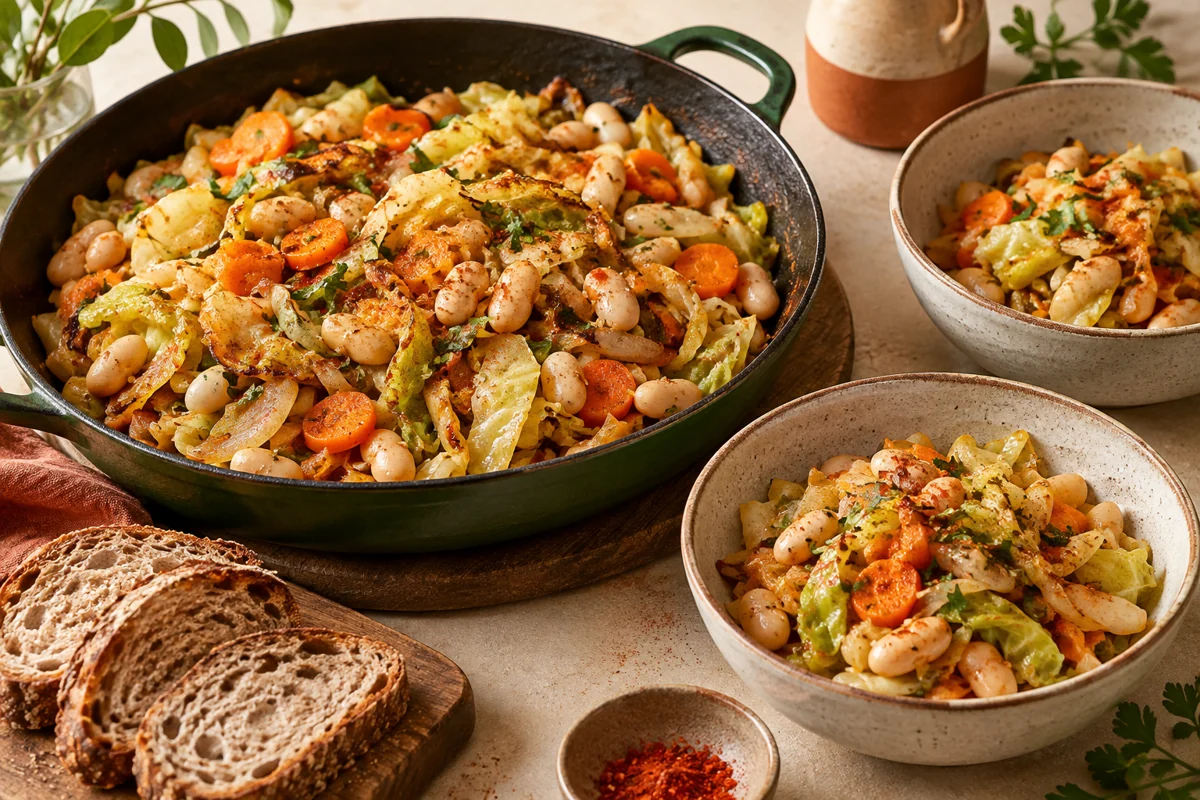
Cabbage does not need to become a diet soup to earn a place at dinner. Thin ribbons soften in a skillet, white beans make the pan more substantial, and a little lemon or vinegar keeps the finished dish from tasting flat.
Serve this with toast for a straightforward vegetarian dinner, or alongside another main food if you want a larger meal. The recipe below is an original editorial formulation that still needs kitchen testing before publication; cooking times are estimates, and the cabbage itself is the better guide.
Ingredients
For about two generous or three smaller portions:
- 2 tablespoons olive oil
- 1 small onion, thinly sliced
- 2 medium carrots, thinly sliced
- About 1/2 small green cabbage, roughly 12 to 16 ounces, cored and thinly sliced
- 1 15-ounce can cannellini or great northern beans, drained and rinsed
- 1/2 teaspoon smoked paprika
- 1/4 cup water or vegetable broth, plus more as needed
- 1 to 2 teaspoons lemon juice or cider vinegar, to taste
- Salt and black pepper
- Whole-grain bread for serving
A cabbage labeled “small” can still vary substantially. If yours is much larger, measure a manageable amount and reserve the rest. The pan should be roomy enough to turn the ribbons without spilling.
Wash produce under running water before preparation, following FDA guidance. Remove damaged outer leaves, cut out the tough core, and slice the remaining cabbage into reasonably similar-width strips.
Soften the onion and carrots first
Heat the oil in a large skillet over medium heat. Add the onion and carrots with a small pinch of salt. Cook, stirring occasionally, until the onion softens and the carrots begin to become tender, roughly 5 to 8 minutes depending on slice thickness.
Add the cabbage and smoked paprika. Toss carefully so the cabbage meets the oil and vegetables. If it looks crowded initially, let it soften a little before turning again. Avoid pouring in a large amount of liquid at this stage; you want a skillet dinner rather than a pot of soup.
Steam briefly, then let excess liquid leave
Add 1/4 cup water or broth and cover. Cook until the cabbage begins to soften, checking after several minutes. Uncover, stir, and continue cooking until the cabbage is as tender as you like and the carrots are cooked through.
If the pan dries before the vegetables are tender, add another small splash of liquid. If it becomes wet, leave it uncovered and let excess liquid evaporate. Thickness of the cabbage and the width of your skillet matter more than a rigid timer.
For a little browning, leave the cabbage undisturbed briefly after the liquid has mostly evaporated, then stir. Keep the heat controlled so the paprika and onion do not burn.
Add beans without turning them into paste
Fold in the drained beans and warm through. Stir gently if you want the beans to keep their shape. For a creamier skillet, deliberately mash a few beans against the side of the pan and stir them into the remaining liquid.
Taste before adding more salt, particularly if you used salted broth or canned beans. Turn off the heat and add lemon juice or cider vinegar a little at a time. The finish should brighten the vegetables, not make the whole dish sharply sour.
Serve with toast. Optional grated cheese or chopped parsley can go on top, but neither is required. Our balanced plate guide can help you decide what else belongs alongside the skillet for your appetite.
Adjust the texture, not just the seasoning
Cabbage still tough: Add a little liquid, cover briefly, and keep cooking. More acid will not substitute for tenderness.
Beans too soft: Fold them in later next time and stir less. Bean brands and cooked-from-dry batches have different textures.
Pan watery: Uncover and simmer gently before adding the finish. Serve with a slotted spoon if needed, but use less starting liquid next time.
Dinner feels too small: Add more bread, a grain, or another side. A recipe yield is not a universal portion requirement.
Give the rest of the cabbage another job
Use the unused cabbage in tacos, a fresh slaw, or a second cooked dish while it remains in good condition. Our five-day dinner plan for two pairs cabbage tacos and this skillet in one shopping list.
For nights when there is no fresh cabbage left, the frozen-vegetable dinner ideas offer a different pantry-and-freezer route. Both approaches start with ingredients you can use in more than one meal.
Leftovers
Cool and refrigerate cooked portions promptly in shallow containers. FoodSafety.gov gives a general three-to-four-day refrigerated window for many cooked leftovers; use the earliest applicable limit when adding previously cooked components. Freeze a portion early if you will not eat it within the appropriate window.
Reheat until adequately hot throughout using safe leftover guidance. Add a fresh squeeze of lemon and fresh toast at serving rather than storing the bread in the same container. The skillet will be softer after reheating, which is fine for this style of meal.
A few common questions
Which white beans work?
Cannellini or great northern beans are useful starting points. Drain and rinse canned beans; cooked-from-dry beans also work if prepared and stored safely.
Can I use red cabbage?
You can adapt the dish, but color, texture, and cooking time will differ. Green cabbage is the starting point for this formulation.