5 Dinners With Frozen Vegetables That Do Not Turn Watery
Use frozen broccoli, peas, spinach, and mixed vegetables in five easy dinners, with cooking methods that keep excess moisture under control.
Frozen vegetables are useful on the night when fresh produce is running low. The problem is often texture: too much ice, a crowded pan, or a sauce that becomes thinner than intended.
Give the vegetable a cooking method that fits the dish. Broccoli can be roasted or steamed; spinach often needs excess liquid removed; peas usually need very little time beyond their package instructions. Start with the freezer bag you have rather than buying a different one for every recipe.
Decide where the moisture should go
Roasting: Use a hot oven, a roomy pan, and a single layer. Frozen vegetables release water as they cook; crowding encourages steaming. A starting temperature around 425°F works for many broccoli florets, but size, coating, and oven performance vary. Follow package directions and check for tender centers and browned edges rather than relying on one exact minute count.
Sauces: Cook vegetables before adding a creamy or delicate sauce when the water would thin it. For frozen spinach, prepare it according to the package and press out excess liquid if the dish calls for a dry filling.
Soups: The extra moisture is usually less troublesome because the dish already has broth. Add vegetables according to the time they need; peas and thick carrot pieces should not automatically go in together.
Wash fresh produce used alongside the frozen ingredients under running water, following FDA guidance. Frozen products need their own package cooking instructions; a bag of vegetables is not automatically a ready-to-eat snack.
Five dinners to make from the freezer
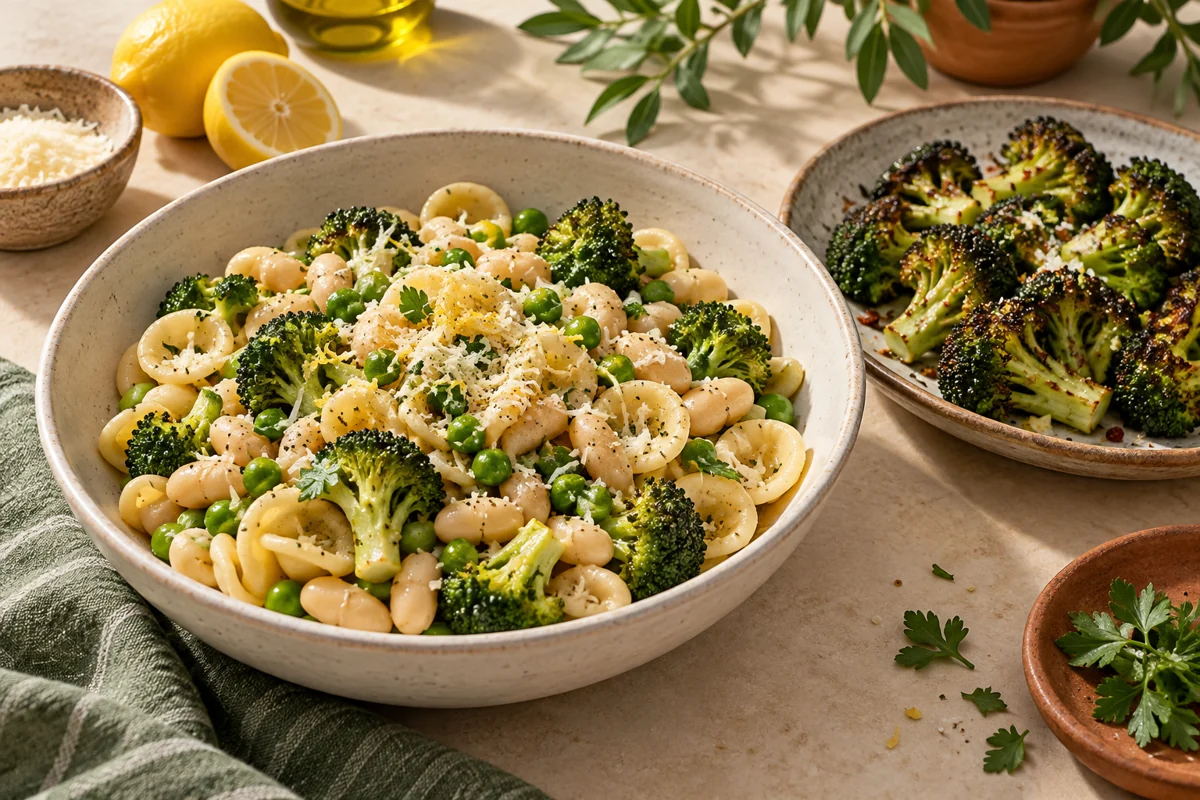
1. Broccoli, pea, and white bean pasta
For two starting servings, cook about 6 ounces dry pasta. Prepare 1 to 2 cups frozen broccoli and 1/2 cup frozen peas according to their packages. Warm one drained 15-ounce can white beans in a roomy skillet with a little oil.
Add the vegetables and cooked pasta. Loosen with reserved pasta water a little at a time, then finish with lemon and optional Parmesan. Let excess vegetable water evaporate before adding pasta water, so you are controlling the sauce rather than chasing a thin one.
2. Roasted broccoli chickpea bowls
Spread frozen broccoli on a roomy baking sheet, toss with a little oil and seasoning, and roast until cooked and browned where possible. Warm drained chickpeas separately. Serve over couscous or another cooked grain with lemon-yogurt sauce on the side.
Do not put a deep mound of frozen florets in a small baking dish and expect crisp edges. Use two pans if needed. Choose a sauce that adds flavor without soaking the roasted vegetables immediately.
3. Spinach and lentil tomato skillet
Prepare frozen spinach according to its package, then remove excess liquid as appropriate. Soften diced onion in a skillet, add tomato sauce and cooked lentils, and simmer until the mixture is hot. Fold in the spinach and serve with toast or rice.
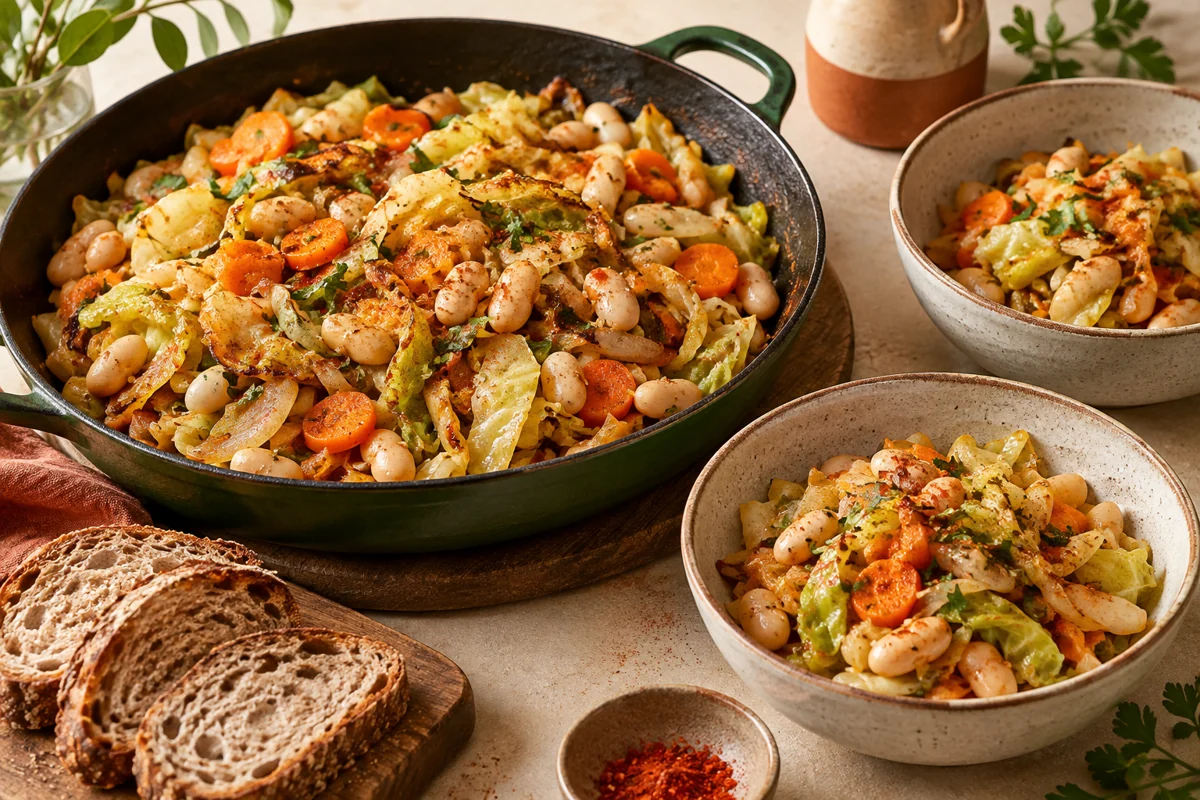
This is useful for partial bags of spinach that would otherwise remain in the freezer. Taste after adding the sauce and lentils; prepared ingredients can already contain salt. For another vegetable-and-bean skillet, see our cabbage dinner recipe.
4. Mixed-vegetable tofu rice bowl
Cook tofu using the package instructions and your preferred method, then set aside. Cook frozen mixed vegetables in the skillet until adequately heated and excess liquid has evaporated. Add cooked rice and a small amount of sauce, then return the tofu to the pan.
Use a pan large enough to stir comfortably. If everything is stacked several inches high, cook in batches. Keep sauce restrained at first; you can add more at the table. Prepared rice and tofu are perishable, so use safe storage and reheating practices rather than treating them like dry pantry ingredients.
5. Chicken and vegetable soup
Simmer diced onion in broth until tender, then add frozen vegetables according to the time and preparation they need. Add safely stored cooked chicken and heat thoroughly. Pasta, beans, or a cooked grain can make the bowl more substantial.
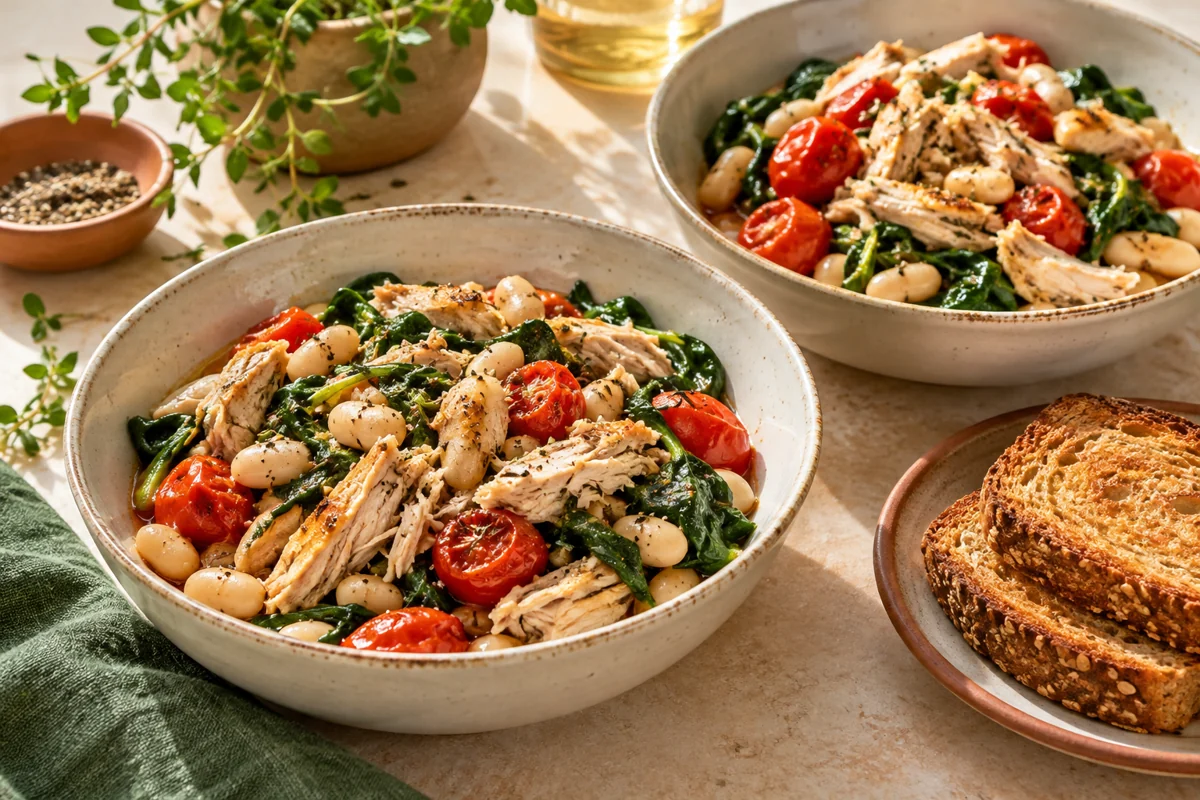
If you are using purchased cooked chicken, our rotisserie chicken dinners for two explains portioning and the short refrigerated storage window. Make a small pot when you want one dinner, not a large batch simply because the vegetable bag is big.
Choose the bag by the meal
Plain broccoli, peas, spinach, and mixed vegetables can work across several dishes. Sauced or seasoned products can also be useful, but they change both flavor and the amount of extra sauce you need. Read the ingredient list and preparation instructions before planning around them.
USDA MyPlate includes fresh, frozen, canned, and dried vegetables within the Vegetable Group. You do not need to treat a frozen bag as a failed fresh-food plan. Use the form that helps you get dinner made and that fits the dish.
Keep a two-meal fallback
Pick one pasta or bowl and one soup or skillet from this list. Keep the vegetables and pantry ingredients for those two meals available. The easy healthy dinner guide has more flexible combinations if you want to change the protein or grain.
The purpose of a freezer fallback is fewer last-minute decisions. A short rotation you can cook comfortably is more useful than a freezer full of ingredients for recipes you never make.
A few common questions
Should I thaw frozen vegetables first?
It depends on the dish and package directions. For roasting, many vegetables can start frozen; for fillings or some sauces, thawing and draining may help control moisture.
Are frozen vegetables ready to eat without cooking?
Do not assume so. Follow the specific package cooking instructions and food-safety directions before adding them to a cold or finished dish.